Latest Posts

Helping Parents Help Children In Traumatic Times

Article originally appeared HERE at SENG (Supporting Emotional Needs of the Gifted)

Again the world grieves from another act of outrageous violence as was witnessed in Orlando, Florida this weekend. A heinous violence inflicted upon so many in the LGBT community and affecting us all. LGBT children and their parents are especially affected by the haunting message of prejudice and hate as a result of this tragic event.

Repeatedly around the world we witness other equally egregious acts of hate directed towards gender, race, creed, nationality, ethnicity and, thus, to humanity itself. We stand in solidarity with all victims of violence.

Meanwhile, the media’s focus on these hateful events can make staying focused on daily life challenging. We sometimes come to believe the world is dangerous and filled with hopelessness. This is especially true with children who look to adults to guide them.

Throughout childhood, children are exposed to many acts of violence, both real and simulated. Movies, video games, and television programs are increasingly presenting violent acts as entertainment, and giving mixed messages about violence. Violence reported in news programs contributes to further negatively impact children’s health. By age 18, most children have already been witness to over 200,000 televised acts of violence, both actual and simulated. Visual imagery is potent, and for some individuals, many cannot easily “un-see” events.

Many children are especially sensitive and deeply concerned with world events. For example, gifted children with Dabrowski’s overexcitabilities can become physically and psychologically enmeshed by news of a mass shooting or other traumatic world event. Trauma from viewing replays of television broadcasts can be as if those events are recurring again and again, each time initiating the same strong stress response and panic.

Research is growing in the area of childhood toxic stress, and witnessing violence – whether actual or simulated – can strongly affect a child’s growing sense of self and emotional balance. Exposure to violence can, in the long run:

  • Teach children that violence is an acceptable way of dealing with conflict.
  • Lead children to perpetuate violence and aggression themselves.
  • Desensitize children to the real-life violence around them.
  • Lead children to become world-weary, cynical, and distrustful.
  • Cause children to become hopeless in helping themselves or others victimized by violence.
  • Cause children actual physical ailments as well as long-term negative health effects.

It is everyone’s responsibility to both protect children as well as reassure them that there are far more good people in the world than evil. While today’s children no longer have the reassuring Mr. Rogers of Mr. Rogers’ Neighborhood, his words are both timeless and deeply moving:

“When I was a boy and I would see scary things in the news, my mother would say to me, ‘Look for the helpers. You will always find people who are helping.’ To this day, especially in times of disaster, I remember my mother’s words, and I am always comforted by realizing that there are still so many helpers — so many caring people in this world.” – Mr. Fred Rogers

Adults can do much to help children cope with traumatic news and imagery of violence. The first step is to begin coping with their own feelings of anxiety and fear. Parents also need to be acutely aware that children can be excellent readers of nonverbal facial expressions and tone of voice. Parents must be cognizant not to transfer their own fears to their children.

Other suggestions for parents include:

  • Teach children that it’s perfectly normal to feel afraid or anxious. There is nothing wrong with children if they feel this way. Children need to be accepted for who they are and how they feel.
  • Reassure children that there are vastly more loving and caring people in the world than those who inflict pain and sorrow.
  • Begin first by answering children’s questions with a question like, “What do you know about what happened?” Many children will answer only vaguely or just say they don’t know.
  • Answer any specific questions only in terms of their emotional – not chronological or intellectual – level of development. Keep things simple and comforting for the child. Teens can handle more detailed information, but still address topics in terms of emotional development.
  • Try to restrict television news broadcasts to those children ages 8 and older, as per the recommendations of the American Academy of Pediatrics. Also be cautious of simulated violence in television programming, films, and video games. Monitor children’s viewing with parental controls if they have bedroom televisions or personal computers.
  • When traumatic world events occur, it is always easier to hear a parent relay the feelings of the information in a reassuring way rather than to hear a report or see a news broadcast. A parent can say something like, “The news makes me sad, but I will take care of you.”
  • Young children cannot always easily separate real events from fictional ones, nor events occurring far away or in one’s neighborhood, so it is particularly important to limit exposure to news violence and violence in entertainment in the young.
  • Children need to know that they and their family are safe. Reassure them. Tell them many people are helpers and that they working to make a safe world.
  • Consider alleviating anxiety by asking children what they would like to do to help. Many children feel empowered if they can help raise funds, make art, or donate to organizations that can assist victims. Some children may wish to pray.

Above all…Remind your children that you love them and will keep them safe. May peace, tolerance and love guide us on a path to the future.

This article also appears on The Huffington Post
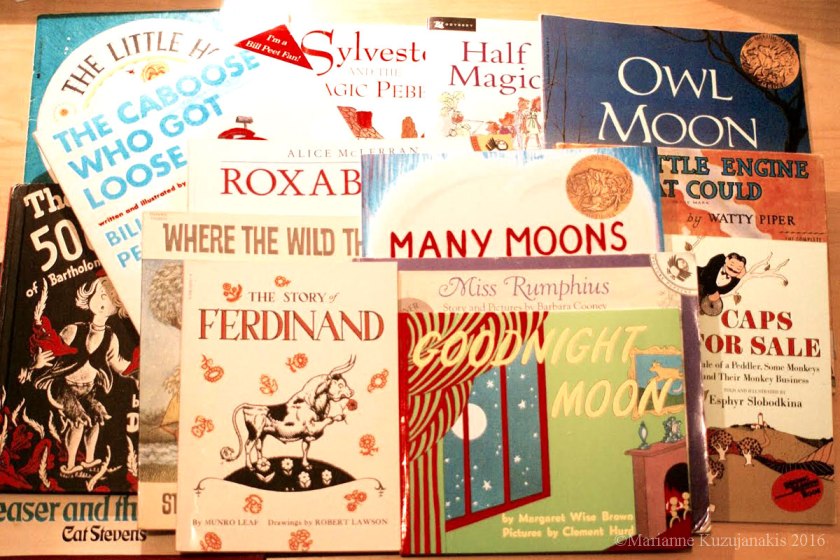
The Read Aloud Crowd


“Frederick Douglass taught that literacy is the path from slavery to freedom. There are many kinds of slavery and many kinds of freedom, but reading is still the path.” – Carl Sagan

litworldlogothumbnail

Today – February 24 – is World Read Aloud Day, a day that commemorates the value of literacy and sharing story with children. Many children’s book authors are even taking to Skype to share their stories around the world.

Some of my most precious parenting memories include read-alouds with my child. Hours upon hours of story. Even after my son could easily read, we continued many years of sharing stories. Challenging books that made us think as well as feel. Stories filled with friendship and of worlds both here and beyond our own.

Kate DiCamillo, award-winning author and the 2014-2015 National Ambassador for Young People’s Literature writes:

“Stories are light. Light is precious in a world so dark.”

Stories are indeed LIGHT. In a world where there exist stark dichotomies of lightness and darkness, wealth and poverty, fairness and unfairness, there is a desperate need for the power of story. Through story, children may discover their first safe paths to understanding their world as well as themselves. Through stories about delight as well as loss, illness and superpowers, loneliness and love, and the challenges of race and gender identity, children find kinship with others. Sometimes even those books designated a “banned books” offer much to children seeking answers for questions already on their minds.

What child cannot feel the magic in the words of Christopher Robin in A.A. Milne’s book House at Pooh Corner, when he says to Winnie the Pooh,

“You are braver than you believe, stronger than you seem, and smarter than you think.”

And what better way to speak to children than through the words of Albus Dumbledore, the headmaster in J.K.Rowling’s Harry Potter series, who says,

“Happiness can be found even in the darkest times if one only remembers to turn on the light.”

From the sponsors of World Read Aloud Day it states:

“World Read Aloud Day motivates children, teens, and adults worldwide to celebrate the power of words and creates a community of readers taking action to show the world that the right to literacy belongs to all people.”

Literacy and reading do belong to ALL people. But in the U.S. alone, 44 million parents cannot read well enough to read a book to their child. And literacy isn’t the only issue. Not all people have the benefit of access to books. Here in the U.S., almost a quarter of all children live in poverty – that’s 16 million children. Many poor communities lack libraries. 61% of low-incomes homes with children do not own a children’s book.

Reach-Out-and-Read and First Book are but two organizations actively working to get books into the hands of children. Many doctor’s offices already provide free books with every appointment. Libraries, where they are available, offer regular children’s read-alouds.

If print books are not always accessible, finding ways to reach children through online books is another possibility. Reading Rainbow has been at the forefront of this literacy endeavor. Many free online Youtube videos are also available, sometimes with authors reading aloud their own stories. There are also several websites, including Storyline Online and the Indianapolis Public Library, which offer many free online video read-alouds.

But we also need to address the electronic divide where 30-50% of low-income families with children ages 0-18 years lack high-speed internet access in their homes. More and more schools require the use of the internet in their assignments, making it difficult for many children to ever compete on a level playing field, let alone participate in the enormous joy of books.

It must also be noted that reading aloud to children may not be as widespread as one would hope. In a previous blog I cited studies showing that only 13% of parents read nightly to their children, and a third of parents may be more motivated by guilt than by a love for reading aloud.

One bright light in all this is that many cultures both here and around the world still practice oral storytelling traditions. This is another beautiful way to share, entertain, and bring communities together through the power of story.

Stories certainly may not solve all the troubles of the world, but stories can offer hope, commonality, education, and inspiration. That can be just the motivating spark a child needs in life. Stories can also cultivate wonder. Just as the grasshopper said to James in Roald Dahl’s James and the Giant Peach,

“My dear young fellow,” the Old-Green-Grasshopper said gently, “there are a whole lot of things in this world of ours you haven’t started wondering about yet.”

Celebrate World Read Aloud Day today…but not just today. Make World Read Aloud a daily event. Share your books. Share your time. Share your own family stories. Provide children with tools to help them discover the stories that they will someday share with their own families. Provide them a world, as Carl Sagan said, with a path towards freedom.

To help you begin, listen to the incomparable Eric Carle as he reads his classic picture book The Very Hungry Caterpillar.

And then listen to a narration by John Kelin of the beloved Maurice Sendak’s memorable Where The Wild Things Are.

The Other Victims

On December 2nd in San Bernardino, California, the U.S. experienced yet another mass shooting.

At a company Christmas party, 14 innocent people were killed and 21 wounded. Two shooters were also killed. News of the tragedy caught all of our attention and has held that attention in these days since.

Articles, news programs, social media, speeches, and protests all cycle again. Then, as always, the attention will likely quiet down until the next time. I hope I’m wrong.

Meanwhile, the gun dealers themselves receive rush sales in the days following such attacks. Black Friday, the December 4th retail sales day, resulted in an all-time record-breaking 185,000 gun background checks, which gives an estimate of approximately 60% of the day’s gun sales.

U.S. citizens already own over 300 million guns – or approximately one for every citizen. Compare this to the police force and military that together in total have approximately 4 million guns.

Today is a definite bull market for gun dealers. A recent article writes:

“Over the last five years Smith & Wesson and Sturm, Ruger stocks have gained 320%, outperforming profitable companies like Apple. Smith & Wesson sales hit a record high of $626m last year, up 6.7% from $587.5m in 2013.”

But I’m not going to write about gun control or about the frequency of mass shootings in the U.S. Much has already been said. Still much more can be written on the breakdown of the fabric of society, the family unit, education, job security, the effects of media, and so on.

While I am deeply concerned with all of these issues, I am particularly concerned with one specific issue and its long-term ramifications.

THE CHILDREN.

Children are exposed to gun violence. Children are victims of gun violence.

In the San Bernardino, California shooting, not only were adult victims involved, but there were also twenty children left behind without a parent. We often don’t hear about the children left behind. I think we should put a face to this tragedy. Every day children lose parents to gun violence. Over 20% of children have also been witnesses to a real shooting. 46 million children every year in the U.S. are exposed to violence of all sorts in their homes or neighborhoods.

The media plays its own role, and the American Psychiatric Association reported that,

By age 18, a U.S. youth will have seen 16,000 simulated murders and 200,000 acts of violence.

Exposure to violence has long-standing consequences. We are only beginning to examine the long-term consequences of exposure to media violence. The trauma of actually losing a family member or even a friend to violence is substantial, and unless any of you have experienced the pain and helplessness, it cannot even be imagined. Children who are grieving as a result of such a loss are at high risk for PTSD and probable long-term emotional and health issues. These children need emergency counseling and support.

Each year in the U.S., there are over 33,000 deaths from firearms – on track this year for surpassing, for the first time, motor vehicle deaths. It will now be more likely to be killed by a gun in the U.S. than by a car or truck.

A gun kills seven children every single day. For children, teens, and young adults, approximately one child dies from firearms every 70 minutes. Over 3,000 children and teens are killed every year from firearms, mostly from homicide or suicide. If you extend the age group to include young adults who are less than 25 years of age, that number increases to over 6,000 deaths annually. African-American children, in particular those between ages 15-24, are at risk of firearms-related death at a rate far exceeding that of any other U.S. group.

Each year in the U.S., there are approximately an additional 84,000 non-fatal firearm injuries. Of these, 36,000 injuries occur in children, teens and young adults. Some of these injuries are severe, traumatic, and life-changing.

With so many guns, gun sales, and incidences of gun violence, it may come as a surprise that only 32% of U.S. homes have guns. One can only extrapolate that while some homes have no guns, others have small arsenals. Furthermore, not all gun owners are responsible with the care of their guns. One-third of household guns are kept unlocked and fully loaded. Make no mistake…the vast majority of children (75% of children less than ten) know where the family guns are kept.

Also not often discussed are the children of the perpetrators of gun violence. The shooters in the San Bernardino incident had a six-month-old child. This child is as much a victim of the massacre as the children of the other casualties. Sometimes the shooter survives, and is then taken to court, tried and convicted and placed in prison. The children of these criminals are still victims themselves, separated from parents and for violent reasons.

Five million children at some point in their childhoods have had a parent incarcerated for one of a variety of reasons. That is one out of every 16 children. The frequency is twice that for African-American children. Three times as frequent in families of poverty.

For some children, their parent is in prison for a violent crime, be it gun-related or other violent act. These children often have greater lifetime exposures to violence and tragedy. Using data from Child Trends of residential parents only, for children with a parent in prison, one-third witnessed domestic violence, one-fourth lived with a mentally ill or suicidal family member, and 10% experienced the death of a parent. These are likely underestimates.

Having a gun in the home, especially with a child, is not the back-up safety plan many feel it is. In fact, owning a gun may raise the risks of accidental shootings, homicides, and suicides by a factor of 22.

Furthermore,

“For every time a gun in the home was used in a self-defense or legally justifiable shooting, there were four unintentional shootings, seven criminal assaults or homicides, and eleven attempted or completed suicides.”

Children should be at the center stage of this ongoing debate. They are the victims left behind when parents are killed. They are victims who themselves die at the hand of others or by their own hands. Children are our future, and for many their future will be limited. They deserve their voices to be heard.

Importantly…Gun deaths as a result of acts of domestic terrorism or mass shootings should not be the only events to get our attention. Kids and parents die each and every day due to gun violence.

Shame on us for turning our backs on this issue for so long. Shame on us if we turn away from it again.

“We owe our children – the most vulnerable citizens in any society – a life free from violence and fear.” – Nelson Mandela

ADDITIONAL READINGS:

Protect Children – Not Guns (Children’s Defense Fund)

The State of America’s Children (Children’s Defense Fund)

Young Guns: How Gun Violence Is Devastating The Millennial Generation (Center for American Progress)

Parents Behind Bars: What Happens To Their Children (Child Trends)

Behind the Bloodshed: The Untold Story Of America’s Mass Killings

The Brady Campaign To Prevent Gun Violence

[This article also appears on Huffington Post]

Breaking The Cycle

The recent world events have left us in great pain and mourning. But large public events, whether terrorist attacks or natural disasters, are not the only events required to incite such pain. Each of us and all communities throughout time – the biggest and the smallest – can list examples of man’s sorrows as well as man’s inhumanity towards man.

How can one live, day-by-day, with the knowledge and experience of pain, unfairness, and evil in the world? For many the natural response becomes resentment, retribution, or revenge. These are what I term “The OTHER three R’s”.

Is there a better way?

The recent November 13th Paris attacks left yet another gaping wound in the world’s soul. But perhaps no one more succinctly articulated this struggle and the importance of disengaging from hate better than the grieving husband who lost his beloved wife in those attacks and wrote a public letter to those responsible. Excerpts include:

“I will not grant you the gift of my hatred. You’re asking for it, but responding to hatred with anger is falling victim to the same ignorance that has made you what you are. You want me to be scared, to view my countrymen with mistrust, to sacrifice my liberty for my security. You lost.”

You can listen to a full recording of his powerful words HERE.

The world is indeed not fair.

Yet judging and reacting to the world from the standpoint of life needing to be fair only has the potential of inciting more anger, grief, bitterness, and anxiety. There is much we can do to help the world without choosing to be victim to the unfairness.

We all have scars – either invisible or visible. We walk around carrying our ponderous chain of emotions. For some they clang and drag and make moving forward a difficult chore. In terms of emotions such as anger or grief or bitterness or anxiety, these links are onerous. Uncomfortable. And sometimes we carry not just our own, but those of our family, friends, ancestors, and those with whom we feel some connection.

Despite their difficulty, sometimes these connections bring to us a strong sense of belonging and even a sense of purpose. These emotions may even drive one’s passions to advocate – and sometimes successfully – for support and change. I pointed this out in part of my earlier post on anger where I spoke of anger as a constructive energy.

But sometimes the weight of our self-imposed chains, and the expression of these uncomfortable emotions, can feel like being at the edge of a black hole. Time is always altered at the event horizon. Progress feels halted. Frustrations simmer. Escape feels impossible.

At the core of this black hole…cortisol.

Cortisol is a hormone released by our brain’s adrenal gland in response to physical and/or psychological stress or pain. Our uncomfortable emotions as well as sleep-deprivation can likewise increase cortisol levels.

Cortisol is the fight or flight hormone. This response is necessary in extreme times when one’s life itself is placed at immediate risk. One role of cortisol is to assist in the generation of glucose to increase blood glucose availability for quick energy to serve the muscles and organ systems. These effects are crucial in life and death situations.

Unfortunately, the same cortisol effects are initiated by non-life threatening situations involving our uncomfortable emotions including anger, anxiety, bitterness, and grief. Detrimental health effects of prolonged heightened cortisol are well known. High blood pressure, cardiac disease, obesity, and lowered immunity are but a few.

Keeping the memory of atrocities and wrongs alive at the forefront of our brain affects this neurochemical state. Locked inside this state, trigger-fast reactions may occur to situations not warranting such a response. Expressed are rage, hostility, hatred, and resentment, sometimes even generalized to everyone and everything.

So what is the answer to both protect our health and end the cycle of hatred?

Forgiveness may be just the answer. Forgiveness can offer a step forward. Forgiveness can also provide beneficial outcomes. Forgiveness is not under claim of ownership by any religion nor ideology. Forgiveness is simply a pure and honest expression of humanity.

Uncomfortable emotions including anger are future-directed emotions for past-directed actions. Fear and hatred are the fuels that keep the flame of anger burning. Forgiveness, on the other hand, exists in the present. Understanding and compassion are the essential modes of transportation by which we may move past anger to forgiveness.

Forgiveness is the reduction of resentment and of blame. Blame for others as well as self. Forgiveness is the resolution of anger, of hatred, of hostility. Through forgiveness, we can eliminate the instinct towards revenge, retribution, and retaliation. We can also benefit our own health through forgiveness.

Let’s be clear. Forgiveness doesn’t mean pardoning or condoning an offense. Forgiveness doesn’t mean reconciliation, nor does it mean being submissive or weak or foolish. Forgiveness doesn’t mean justice is ignored nor abolished. Forgiveness does mean humanity is upheld.

Forgiveness also doesn’t negate uncomfortable emotions. All emotions are intrinsic to each of us. Forgiveness simply re-directs emotions including anger and bitterness to a safer and more positive and less uncomfortable end.

Let’s also be clear that forgiveness is controversial. Some people firmly believe forgiveness is an act that re-traumatizes or victimizes the person who has been already has been wronged. Forgiveness can be felt as an insult to the validity of the recipient’s pain and injury – physical and/or psychological.

Revenge or retribution is thus a more natural response. In our stressed and litigious and growing military society, that urge to retaliate becomes amplified. But even in times of war, there is a need for understanding, compassion, and yes…forgiveness.

Less than a week before the Paris attacks, the BBC program Doctor Who showed a powerful episode entitled “The Zygon Inversion”. In that episode, the Doctor (played by Peter Capaldi) delivered a potent anti-war speech when both opponents – the Zygon shape-shifting alien invader (Bonnie) and the Earth’s UNIT director (Kate) – were at a tense standstill at the brink of possible war. Here is that memorable speech:

The Doctor’s words resonate.

“The only way anyone can live in peace is if they’re prepared to forgive. Why don’t you break the cycle?”

FORGIVENESS IS breaking the cycle. FORGIVENESS ISN’T giving up and waving the white flag. In fact, forgiveness is perhaps the most courageous thing a human can do. It’s arriving at a point of understanding. It’s moving forward in time and closing one’s anger to the past.

Forgiveness may be important for not just specific personal events, but also for those abstract events and situations we carry with us from the nightly news, as well as our ancestors and historical accounts. Issues such as gender inequality, race inequality, religious differences, and cultural differences are a few of the human stories we carry with us. Being present in forgiveness isn’t ignoring history, but rather learning from the past, and living in the present.

The past is gone, irretrievably, and some believe it is better to allow it to be forgiven. Forgiveness offers freedom. Forgiveness offers hope. Forgiveness can provide us all with peace of mind. Perhaps even in the most heinous of situations, understanding and compassion and forgiveness may offer an opportunity to begin the lengthy process of healing. One can think of forgiveness as a mindful act of defiance.

Today can begin with a fresh and clean slate.

Through those poignant words from the grieving French husband, let’s honor those harmed in the Paris attacks and in all situations around the world.

When you can forego your uncomfortable emotions and strive to understand and perhaps forgive, you are no longer a victim of your situation. You are the most courageous person in the room.

I honor that courage and I honor you.

“He who cannot forgive breaks the bridge over which he himself must pass.” – attributed to George Herbert (1593-1633)

[NOTE: If you are dealing with difficult feelings of anger, grief, or anxiety, please seek techniques that may be helpful in alleviating your discomfort. A few techniques include mindfulness, meditation, and support group involvement. If your feelings are overwhelming and cannot be addressed through these methods, please seek the help of a medical professional.]

This article also appears on The Huffington Post HERE.

This article also appears on The Coffee Klatch blog HERE.

Have A Happy [not exasperating] Holiday

While this article was officially written for the gifted advocacy organization SENG, it is reprinted here with their permission from this month’s issue of their SENGVine newsletter.

This blog is also being included as part of the Hoagie’s Gifted Education Blog Hop Series.

NOTE: Much of the following information may be effective not just for gifted families, but also for all families with children who may struggle with this busy holiday time.

When the air turns crisp and the leaves glow brightly, our thoughts are captured by all the many fall and winter holidays and celebrations. The holidays traditionally bring with them merriment, joy and peace. Or so the greeting cards say.

Harvest time offers horse-drawn hayrides and corn mazes. Halloween has trick-or-treating, bobbing apples, and costumes. Thanksgiving gives us family get-togethers with lots of food, hugs and conversation. In December, the holidays come with flickering lights, candles, crowded stores, booming music, the smells of nutmeg, cinnamon and cloves, and brand-new dress-up clothes. In malls, white-bearded santas also await.

Unfortunately, for some families, the holiday celebrations may instead bring an uneasy joy, filled with challenging experiences.

What conditions place a gifted child at greatest risk?

DABROWSKI’S OVEREXCITABILITIES: Gifted individuals with overexcitabilities can become caught up in the excitement, emotions, and sensory onslaught of color, sound, smell, taste, and touch. Their extreme sensitivity to stimuli may lead to meltdowns, anxiety,difficulty sleeping, and imaginational overload. New clothes may irritate, new foods may disgust, noises and crowds may upset, and their energy levels may at times seem endless.

TWICE-EXCEPTIONAL ISSUES:Examples include ADHD, autism, and sensory processing disorder. These 2e individuals may experience symptoms similar to Dabrowski’s overexcitabilities, and depending upon their 2e issues, these children may be stressed by the absence of a regular routine, and overwhelmed by the many unexpected gatherings, brand-new smells and blinking holiday lights. Meltdowns and anxiety are but two of the results that may occur.

DEVELOPMENTAL ASYNCHRONY: Many gifted children, in particular those highest on the IQ scale, are at risk for developmental asynchrony. These children have lagging emotional impulse control. Frustrations, fears, anxiety, and stressors like hunger and fatigue, can result in behavioral outbursts and meltdowns. Providing these children with similar supports as one provides a 2e child can help encourage healthy emotional development.

INTROVERSION: Introversion is not the same as shyness, but both shy individuals and introverted individuals need quiet time alone. This quiet time allows for the re-centering and re-energizing of one’s self. The holiday celebrations and gatherings may seriously limit time alone, and the resultant pressure to be on one’s best social behavior among so many people so frequently can drain energy levels, leading to anxiety, withdrawal, physical symptoms, and even meltdowns.

ANXIETY: Gifted individuals with anxiety already are on emotional hyper-alert. Sometimes the anxiety is a social anxiety that can be drastically worsened by the frequent parties and celebrations of the season. Sometimes the anxiety is generalized, and if changes to routine occur, including to food and sleep schedules, emotional balance can be upset and appear as clinginess, stomachaches, headaches, and refusal to leave the home.

ALLERGIES (FOOD & ENVIRONMENTAL): The harvest time signals the beginning of many food-related events, a tradition across cultures in honor of the earth’s generous bounty. Individuals with food allergies as well as environmental allergies (both felt by some researchers to be more common in the gifted than in the general population) always try to be cognizant of risks. New and uncommon foods, food dyes, scented candles, perfumes and potpourri, crackling fireplaces, pet dander, fall leaves, as well as classic symbols of the holidays may trigger reactions. Young children with allergies do not always recognize the risks, and they may accidentally consume foods or be exposed to trigger allergens, some of which can place the child’s health at serious risk.

What’s a parent to do to help not just survive – but embrace – the holidays?

WHEN INVITED TO SOMEONE ELSE’S HOME: Parents can carry with them an assortment of stress-reducers especially for children with sensory issues with significant anxiety or meltdowns. Chewing gum, headphones, earplugs, sunglasses, a fidget toy, and even a weighted blanket can help. A favorite book for an introverted child can be a stress-reducer. Protein snacks aid children who may not be eating well away from home or can’t find suitable foods that aren’t guaranteed allergy-free. Always tell hosts ahead of time about allergies to avoid these issues, and know that children with allergies do not always want to be singled out as different, so if necessary bring a pot-luck dish that would be welcomed by all.

If a child experiences atypical behaviors (tics, shirt chewing, spinning, stimming, meltdowns) it is helpful to also forewarn hosts so no one over-reacts if one of these self-soothing behaviors occurs. Never ask a child to dress in brand-new clothes when visiting. Itchy new labels or materials can be a stressful experience for children with sensory issues. Children should dress in their most comfortable clothes.

Never force a child to hug or kiss anyone when they do not feel like doing so. Support, but never force a child to speak or make eye contact with anyone if the child is uncomfortable doing so. Privately praise an anxious or sensory-overloaded child who finds the strength to interact. Offer frequent hugs if hugs are soothing to the child. Ask the hosts ahead of time if there might be an option to move the child to a quiet room in their home if anxiety or sensory issues arise. Never expect a child to stay for the entire duration of a party or get-together.

Be alert to (but never hover over) a child’s needs. Be aware of early signs that the child is just becoming sensory-overloaded like aggression, withdrawal, frequent bathroom trips, or covering ears. Then remove the child to a quiet place to decompress before a meltdown results. Do hold firm expectations of appropriate behavior, including not being rude or aggressive. Make sure the child’s siblings are fully aware of triggers and can be supportive helpers for the affected child. Make sure the child has had adequate sleep (or even a nap) before any outing.

WHEN HOSTING A GET-TOGETHER AT HOME: Many of the same above reminders may also help at home. Do make the child’s bedroom a private sanctuary to decompress alone if needed with self-soothing fidget toys, headphones, earplugs, and blankets, as well as favorite books. Involve the child in party preparations only so far as the child feels comfortable. Don’t try to make everything perfect. Perfection is unattainable. Try to maintain regular routines for the child whenever possible (sleep, meals), and make sure some of the foods to be served are favorites of the child. While some children may like to greet guests at the door, for children with sensory issues or anxiety, being the greeter can be extremely stress provoking.

Parents need to monitor their own stress levels, since hosting a party may also cause anxiety in a parent. As the saying goes, “Put your own oxygen mask on before you help others.” Learning mindfulness and meditation techniques can help both the parent and the child better cope with the stress of the season and all of life. Children absorb the energy – both positive and negative – from other people, so maintain a calm demeanor whenever possible. Having the child do some physical activity (exercise, active play) prior to the arrival of guests can sometimes lessen the stress level and avert anxiety.

WHEN SHOPPING OR ATTENDING A PUBLIC EVENT: If it isn’t necessary for the child to go shopping, permit the child to remain at home. Holidays are a most busy time for storekeepers. For those who celebrate Christmas, never force a child to visit Santa Claus or sit on Santa’s lap, unless the child absolutely wants to do so. Some children with sensory issues or anxiety can be traumatized by the event. For Halloween, the same is true of haunted houses that may traumatize some children. When attending holiday plays or musicals, give plenty of time to the child to warm to the setting and allow the child to wear his or her most comfortable clothes.

Do not force the child to remain for the entire performance if signs of increasing sensory overload or anxiety are noted. Do not schedule surprise events or several events on the same day, as the sensory overload and anxiety may be too burdensome for some children. Always carry appropriate protein snacks and fluids when outside the home. A hungry child can be at risk to have a meltdown.

AT HOME: Parents can allow for generous unstructured time at home if doing so eases a child’s anxiety. Some children need the opposite, and do better with predictable and non-stressful firm routines throughout the day. Maintain regular bedtime and meal schedules whenever possible. A tired child with sensory issues is more prone to meltdowns. Predictability is key to helping the days run more smoothly. Surprises in schedule are typically unwelcome.

Allow the child to be actively involved in any planned home decorations and foods, and limit excessive blinking lights, scented candles, and other potential triggers. The magic of the holidays can make waiting difficult for some children. Try to have quiet at-home celebrations whenever possible. Smaller partial celebrations divided over the course of the holiday season may be more accepted than a single over the-top celebration.

Above all, remember what the holidays are all about. Joy. Family. Friends. Peace. Love.

Ensure that you and your child and entire family experience this magical time without fear of overstimulation or risk for food allergy complications. Don’t aim for perfection and don’t try to handle everything yourself. Ask for help from family and friends. Paying attention to a few reminders and being mindful of the child’s individual needs (as well as your own needs) can assist in moving everything in the right direction and bringing back the merriment that is at the core of the entire fall and winter seasons!

Happy Holidays to all! Sincere wishes for a safe and joyous season!

“If you want others to be happy, practice compassion. If you want to be happy, practice compassion.” – The Dalai Lama

This blog is being included as part of the Hoagie’s Gifted Education Blog Hop Series. This month it is entitled “Surviving the Holidays With A House Full Of Gifted!”
To see more blogs in the hop, click on the following link:

http://www.hoagiesgifted.org/blog_hop_surviving_the_holidays.htm

blog_hop_dec15_surviving_the_holidays_small

Slippery Slope

Welcome to Day 30 of #30PostsHathSept. [PLEASE READ all my other challenge posts HERE.] Today is my final post for the #30PostsHathSept Blog Challenge. While I will continue to post regularly here on a variety of topics, finding the opportunity to post on a daily basis at the level of depth I try to achieve may not be likely. Please do look for me weekly. Enjoy!

30PostsHathSept300x200sept2015-30

I began planning today’s post since the first one on September 1. For the final challenge day I wanted to say something lasting and representative of my thoughts and beliefs. However, something else more timely has been burning on my mind.

September 27-October 3, 2015 is Banned Books Week.

The American Library Association (ALA)’s Office of Intellectual Freedom has long held the fervent mission to protect intellectual freedom by educating the public and libraries of its importance.

The ALA solidifies this crucial role in, this, its Library Bill of Rights.

“The American Library Association affirms that all libraries are forums for information and ideas, and that the following basic policies should guide their services.”

“I. Books and other library resources should be provided for the interest, information, and enlightenment of all people of the community the library serves. Materials should not be excluded because of the origin, background, or views of those contributing to their creation.
II. Libraries should provide materials and information presenting all points of view on current and historical issues. Materials should not be proscribed or removed because of partisan or doctrinal disapproval.
III. Libraries should challenge censorship in the fulfillment of their responsibility to provide information and enlightenment.
IV. Libraries should cooperate with all persons and groups concerned with resisting abridgment of free expression and free access to ideas.
V. A person’s right to use a library should not be denied or abridged because of origin, age, background, or views.
VI. Libraries which make exhibit spaces and meeting rooms available to the public they serve should make such facilities available on an equitable basis, regardless of the beliefs or affiliations of individuals or groups requesting their use.”

[Adopted June 19, 1939, by the ALA Council; amended October 14, 1944; June 18, 1948; February 2, 1961; June 27, 1967; January 23, 1980; inclusion of “age” reaffirmed January 23, 1996.]

Intellectual freedom.

This is the antithesis of censorship. Yet it seems almost forbidden to speak of a topic like intellectual freedom at a time in history when the freedoms of many individuals and groups here and around the world feel as if they are being challenged in various ways.

The banning of books is but one element in the realm of freedom and free speech. Limiting our intellectual freedom through the banning or challenging of books, through book burnings, or other divisive means is but the first step to risking the loss of other treasured freedoms.

The list of banned and/or challenged books may surprise some people. Many have been some of the most beloved classic books of our age. More than some books were even written for children and young adults.

A number of banned or challenged books are sometimes so ahead of their time that they may elicit shock, horror, and other uncomfortable emotions. But books, like all ideas, need to make us feel and think and only then can they perhaps even move the world towards a more tolerant and positive future. Classic books like George Orwell’s 1984, Harper Lee’s To Kill A Mockingbird, John Steinbeck’s The Grapes of Wrath, Upton Sinclair’s The Jungle, Ralph Ellison’s Invisible Man, and so many others were challenged and/or outright banned. They – and others – will remain as keystones in literature’s timeline.

Some authors of books banned or challenged in the U.S. went on to win National Book Awards (William Styron, John Updike, William Faulkner, Alice Walker, etc…) and some even the Nobel Prize in Literature (John Steinbeck, Vladmir Nabokov, Ernest Hemingway, Toni Morrison, etc…).

Not all banned or challenged books are automatically raised to that of a classic book or award-winning literature. Banning or challenging a book in some ways is a book writer’s dream in that the publicity entailed by the challenge may actually increase readership. However, so many of these books are indeed remarkable works and deserving of as wide an audience as possible. See a full listing by decade of the most commonly banned and challenged books HERE.

So what is the responsibility of society to permit informational freedom?

For one, being able to freely have access to all books is core to this freedom. But in today’s age, with the Internet and social media, this freedom should not alone be limited to books. The Constitution speaks about many of our freedoms in the Amendments. The United States also first approved what was to be named the Freedom of Information Act in 1967. Since then, and especially during this most recent decade, arguments against the Act, as well as significant limitations to this Act (and challenges to our constitutional freedoms) have been put into place, especially for information related to governmental operation. It is not my role in this post to take the opinion for or against these major changes, but only to take note of the slippery slope of informational freedom and its restrictions.

Across the globe, there are people who are denied the right to an education, and thus the ability to learn to read. There are others who have the ability to read, but are denied or unable to have access to specific books or information. Still others, especially in today’s college environment, where students feel the need to protect themselves from difficult and scary concepts, are now requiring many professors to alert them of topics that may be uncomfortable and threatening. There has grown a need to have safe rooms to prevent the exchange of information. Safe rooms that may lead to censorship on college campuses.

Earlier this year in the New York Times, Op-ed writer Judith Shulevitz wrote,

“Last fall, the president of Smith College, Kathleen McCartney, apologized for causing students and faculty to be “hurt” when she failed to object to a racial epithet uttered by a fellow panel member at an alumnae event in New York. The offender was the free-speech advocate Wendy Kaminer, who had been arguing against the use of the euphemism “the n-word” when teaching American history or The Adventures of Huckleberry Finn. In the uproar that followed, the Student Government Association wrote a letter declaring that ‘if Smith is unsafe for one student, it is unsafe for all students’ ”

Ms. Shulewitz went on to say,

“One scholar, Mari J. Matsuda, was particularly insistent that college students not be subjected to ‘the violence of the word’ because many of them ‘are away from home for the first time and at a vulnerable stage of psychological development.’ If they’re targeted and the university does nothing to help them, they will be ‘left to their own resources in coping with the damage wrought.’ That might have, she wrote, ‘lifelong repercussions.’ “

“The violence of the word.”

Such a visual and divisive phrase. I’m a strong and steadfast advocate for children and young adults, and this new development in colleges and how it might further relate to banned and challenged books and informational freedom is a worrisome one. I sense less support in childhood in the development of resilience, at a time when the need for resilience is high. Many factors are involved in resilience, and I hope to address my views of this subject in another post at a later time.

I grew up in the era of the Vietnam War, the National Organization for Women, and the Civil Rights Act. Standing up for freedom, be it individual or collective, was highly important. Even today there are people standing up for important movements like #BlackLivesMatter, poverty, and green energy. Gathering and debating ideas is instrumental to progress. Our conversations on difficult topics are long from being completed. These topics include racism, war, poverty, imprisonment, tolerance, violence, education, mental health, climate change, energy, religion, and so many more.

Books are a central part of important conversations. Words are freedom itself. Sometimes a book is a someone’s first exposure to a specific topic. Even younger people need to discuss these topics. Banning or challenging books is turning one’s back on ideas and conversations. Looking at this year’s long list for the National Book Award, one can see that the need for these types of topics is great. The award nominees discuss topics that in part include resilience, grief, sacrifice, family, relationships, racism, violence, humanity, love, consciousness, faith, coming-of-age, death.

Wow. These are the BIG questions.

These are the questions that need to be asked. Questions that lay deep within the minds of even children and young adults. Many people don’t feel comfortable asking the big questions aloud. Books offer these private conversations in a safe and supportive way.

We all have books that have made a strong impact on our lives. I don’t doubt many people specifically point to a banned or challenged book that did just that for their lives. For me in my teen years, that author was George Orwell, and it was his books Animal Farm and 1984 that inspired me in my life.

So celebrate Banned Books Week by reading a banned or challenged book and by doing so, stand up for intellectual freedom. Freedom in libraries. In schools. In universities. In government. In homes. And around the world.

Then – for a moment – imagine a world where that freedom is taken away.

“If all printers were determined not to print anything till they were sure it would offend nobody, there would be very little printed.” – Benjamin Franklin

[You can enjoy all the daily posts from the #30PostsHathSept bloggers HERE]

Drop By Precious Drop

Welcome to Day 29 of #30PostsHathSept. [PLEASE READ all my other challenge posts HERE.] I hope you enjoy this installment!

30PostsHathSept300x200sept2015-29

Earlier this month, I urged everyone to pay closer attention to the issue of where we get our water. Many in the developed world have come to take something as life sustaining as water for granted. Many organizations meanwhile have been at work behind the scenes to assess the current status of our world water supplies and its future projections.

Water. Two hydrogen atoms and one oxygen atom. That’s all.

NASA just yesterday confirmed the existence of intermittent flows of liquid water on Mars, and it created enough interest that the topic trended on social media. Just think…Water on another terrestrial body. Finding water anywhere outside of Earth is indeed a cause for celebration.

But why doesn’t the state of water On Earth cause as much social media interest as an extra-terrestrial planet or moon?

Those who have first-hand experienced a water crisis have seen how absolutely dependent all life on earth is to water. On average, humans are 50-60% water. At most, we can go three days without it (though children begin to sometimes show significant signs of dehydration within 24 hours).

Water has many functions.

Throughout history, water has been directly bound to life. All the various religions utilize the symbol of water for both cleansing the body as well as providing life. Water is seen as sacred.

Poets and authors utilize water as well to tell their own stories. Water can be both sustenance for life and a means of death. Ralph Waldo Emerson in his poem Water writes:

“The water understands
Civilization well;
It wets my foot, but prettily,
It chills my life, but wittily,
It is not disconcerted,
It is not broken-hearted:
Well used, it decketh joy,
Adorneth, doubleth joy:
Ill used, it will destroy,
In perfect time and measure
With a face of golden pleasure
Elegantly destroy.”

Robert Frost, in the last stanza of his poem Going For Water, in which he and a companion, after finding the well dry, go in search of water by the brook. In that last stanza, he writes,

“A note as from a single place,
A slender tinkling fall that made
Now drops that floated on the pool
Like pearls, and now a silver blade.”

Read the entire poem HERE.

The United Nations Sustainable Development Summit was just held this week (September 25-27). In that summit, water was one of the many topics discussed. They proposed this powerful and challenging worldwide goal.

Goal 6. Ensure availability and sustainable management of water and sanitation for all

6.1 By 2030, achieve universal and equitable access to safe and affordable drinking water for all
6.2 By 2030, achieve access to adequate and equitable sanitation and hygiene for all and end open defecation, paying special attention to the needs of women and girls and those in vulnerable situations
6.3 By 2030, improve water quality by reducing pollution, eliminating dumping and minimizing release of hazardous chemicals and materials, halving the proportion of untreated wastewater and substantially increasing recycling and safe reuse globally
6.4 By 2030, substantially increase water-use efficiency across all sectors and ensure sustainable withdrawals and supply of freshwater to address water scarcity and substantially reduce the number of people suffering from water scarcity
6.5 By 2030, implement integrated water resources management at all levels, including through transboundary cooperation as appropriate
6.6 By 2020, protect and restore water-related ecosystems, including mountains, forests, wetlands, rivers, aquifers and lakes
6.a By 2030, expand international cooperation and capacity-building support to developing countries in water- and sanitation-related activities and programmes, including water harvesting, desalination, water efficiency, wastewater treatment, recycling and reuse technologies
6.b Support and strengthen the participation of local communities in improving water and sanitation management

Even within the developed world (and the U.S.) there is much to be done to protect our own precious water. Residents on California and some others regions in Western U.S. have already experienced significant water shortages and restrictions. While the U.S. may have one of the cleanest water supplies in the world, there have been numerous outbreaks of contaminated water in city supplies that have involved bacteria, viruses, as well as heavy metals. Natural disasters as well as human error have resulted in a number of incidences of tap water contamination in the U.S.

The Clean Water Act (officially called the Federal Water Pollution Control Act) wasn’t even law until 1972 (though a far less comprehensive version came about in 1948). The government is obligated to work with the public to reduce or eliminate pollution from agriculture run-off of nitrates and pesticides, contamination with chemicals and biological organisms, the unbalanced distribution of water across the U.S., and the decaying infrastructure of the many thousands of miles of underground water pipes (with some pipes first constructed in the 1800’s). Already, 5000 miles of pipes are repaired or replaced annually in the U.S. with projections of up to 20,000 miles of pipes per year by 2035.

Just ponder on these facts:

  1. 750 million people around the world lack access to clean water
  2. 840,000 people worldwide die each year from preventable water-related disease
  3. 90% of the deaths from water-related diseases occur in children under 5 years of age.
  4. Women & children spend 140 million hours each day collecting water for their families
  5. By 2025, 50% of the world’s population will live in a water-stressed region
  6. Two-fifths of all people who lack access to clean water live in Africa
  7. The current refugee crises increase the stress of finding clean access to water for even more people

And watch this video by the nonprofit organization charity:water:

Water is not only essential to our lives, but WATER IS THE SYMBOL FOR LIFE anywhere in our solar system. Greener methods of obtaining water, purifying water, and distributing water are needed. Lack of water has long been a cause of inequality and of war. We need to protect water and cherish it, as well as assure that ever living creature has enough of it, because like I said in the post I linked to in my opening paragraph, “If we’re not careful, it and so much else may indeed vanish before we know it.” Two hydrogen atoms and one oxygen atom. That’s all.

Yet water is so powerful beyond measure and beautiful without limit.

water_splash

“A lake is the landscape’s most beautiful and expressive feature. It is earth’s eye; looking into which the beholder measures the depth of his own nature.” -Henry David Thoreau

[You can enjoy all the daily posts from the #30PostsHathSept bloggers HERE]

Shadowed Moon

Welcome to Day 28 of #30PostsHathSept. [PLEASE READ all my other challenge posts HERE.] Enjoy!

30PostsHathSept300x200sept2015-28

Last night’s full moon was at perigee and at a mere 225,623 miles from Earth. Well within imagination’s distance.

Many people, including me, were gifted with a gorgeous full eclipse in brilliant rust-red. The super blood moon. This moon was thus named by being the fourth of a series of similar blood moon eclipses in the past two years. Such an event won’t again be witnessed until 2033.

The excitement around the super blood moon reminds me of my previous post on awe. The super blood moon was a unique event and awesome event. We were enchanted. But how many of us will again look in the sky tonight to see our Earth’s offspring orbiting around us, face-to-face?

The moon has always been a common symbol throughout history. Feminine in nature, its roundness represents the entire cycle of life: crescent in childhood, full in adulthood, and waning in old age and death. The unique rotation between the earth and moon is felt to represent our two human halves of lightness and darkness and the epic battle for good vs. evil.

We are intimately bound to our child, the moon.

Our seasons, weather, and tides are all intrinsically linked to the cycle of the moon. Our calendars and many religious holidays are also bound to the moon. Selene, the Greek goddess of the moon, and the Roman equivalent, Luna, have long been inspirations to artists and poets. Hinduism celebrates Chandra, their lunar goddess. So many cultures have honored moon gods and goddesses, with some of their names including Tarqiup Inua (Inuit), Chia (Columbian), Mama Quilla (Incan), Metztli (Aztec), Iah (Egyptian), Mahina (Polynesian), Tal’lab (Arabian), Sin (Mesopotamian), Mani (Norse), Chang’e (Chinese), Mayari (Philippine), and others.

People often attach meanings to specific moons. Wishes of luck, hope, and even cautious premonitions of changes to come. But all the while the moon sits, oblivious to our beliefs, yet protecting our big blue ball, and cycling around us ever on in its eternal dance.

“In the flood of her joy, the Moon filled the room like a phosphoric atmosphere, like a luminous poison.” – Charles Baudelaire

“Man in the Moon” is a term used by many cultures throughout history of envisioning images on the face of the moon. The many dark flat lake-like areas separated by the lighter hills and the edges of impact craters produce these images. My favorite moon man comes via George Méliès, who wrote and directed the remarkable silent film A Trip to the Moon in 1902.

See the film here in the full and colorized format:

While perhaps more subdued than George Méliès’ vision, here is man’s actual first awe-inspiring journey to the Moon, with the landing of Apollo 11:

People have held a deep fascination for the moon since time began. Our closest neighbor, a keeper of fables and mystery, the moon is as essential to our lives as our own planet Earth.

A haiku in honor of last night’s remarkable event:

Obsidian sky
full moon adorned in copper
coronation day

[You can enjoy all the daily posts from the #30PostsHathSept bloggers HERE]</strong

Awestruck

Welcome to Day 27 of #30PostsHathSept. [PLEASE READ all my other challenge posts HERE.] I hope you enjoy this post!

30PostsHathSept300x200sept2015-27

Maybe I’m a bit old-fashioned in some ways, preferring to come at life with the eyes of a small child.

I flew in from the Midwest this afternoon with my family, and it made me realize that I can’t help but feel some sadness for the loss of awe we have achieved since the dawn of flight. Humans have long wanted to fly the skies like birds. The mythology of Daedalus and Icarus, with Icarus fatally falling to Earth after flying too near the sun, related in part to the yet-unachievable dream of flight. All historical cultures had their own stories and reverence for flight, adorning gods with wings. Even Leonardo da Vinci, in his sketchbooks, envisioned human flight through his inventions.

Today, air flight is routine, at times a great hassle, and rarely ever – except in the very young – an opportunity for awe.

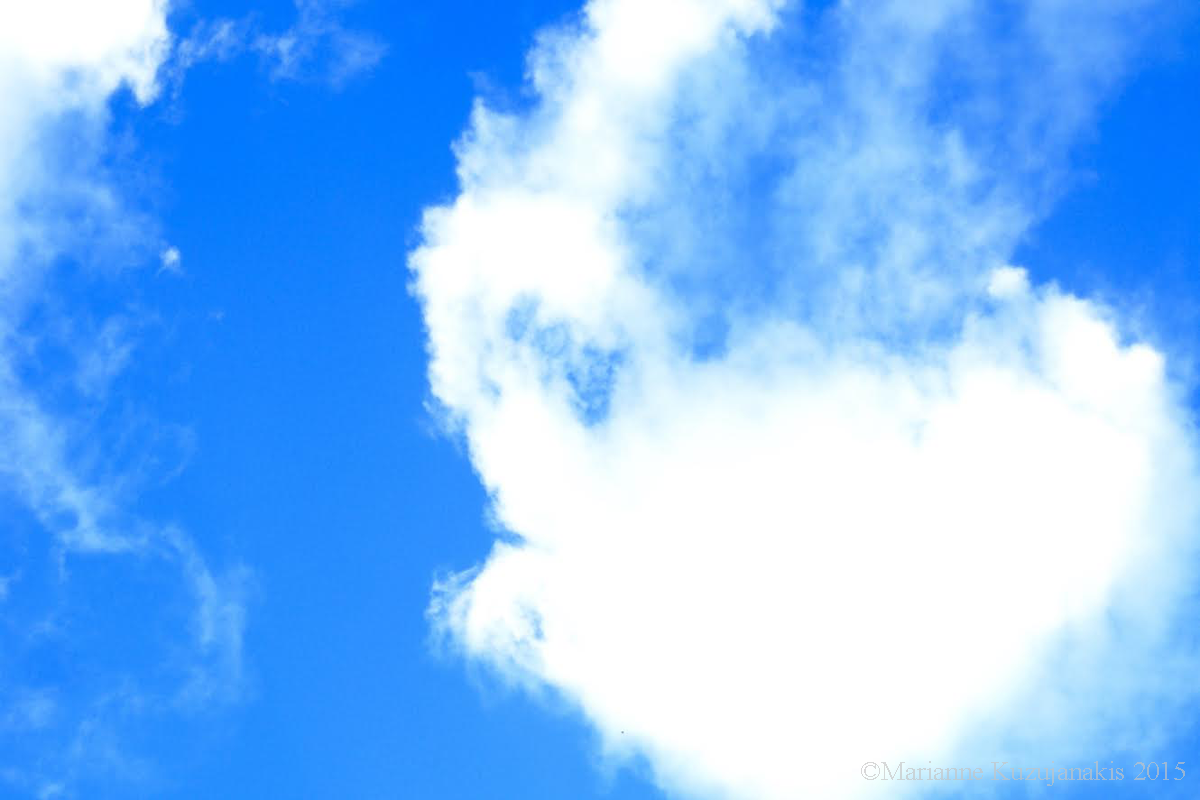
Watch a child look up at clouds. They see figures, shapes, and entire imaginative scenes. They find fascination in things we rarely take a moment to appreciate, let alone notice at all.

cloud_face

AWE.

Awe is a word we sometimes use in cases when the more appropriate word would be nice or cool or great. Awe, as defined by the Oxford Dictionary, is “A feeling of reverential respect mixed with fear or wonder”. Respect. Fear. Wonder. That was indeed how people looked upon the idea of human flight, first with hot air balloons, then planes, and now rockets.

If you are old enough, you will remember the true awe of the Apollo 11 Moon landing. But you may likewise remember how much less attention the last Moon landings received. You may remember the first space shuttle with awe, yet not be able to even guess how many total space shuttle flights were made. [By the way, that number = 135]. Add to this, the number of Soyuz flights to the International Space Station, the Mars rover missions, and the countless other space missions. Space exploration has become increasingly routine to the public, that it doesn’t even get much media attention, except for unique first-time events (the recent comet landing and the Pluto images, as examples).

AWE.

When the first steam railroads were constructed across the U.S., the public called them Iron Horses. The dark, loud, powerful, snorting machines seemed so otherworldly. So awesome. The same is true of the first transcontinental phone call. I remember the first time I saw color TV in the 1960’s. While color TV had been around a bit longer, my neighbors were the first people on our block to buy one. My brother and I went to their home and we could not believe our eyes to see the brilliant green grass of a baseball field through that small screen. The colorful baseball player uniforms. We were awestruck.

In my college days, my now husband showed me around the computer center, a department of punch cards and room-sized computers. The first computer game I played was on the first personal home computer I ever saw (an NCR PC4). It was a pc version of the Pong arcade game. I was mesmerized. It all seemed so impossible. Now computer games have progressed so much that it is unimaginable that it hasn’t taken more than three decades to get to this point.

When cell phones became available, I loved my large clunky phone that I kept safe in a black leather case, with a hole at the top for the pullout antenna. It seemed so astonishing that I could carry my phone with me. Now, cell phones are ubiquitous and small, and can do so much more than any previous phone or early computer.

Other time periods were equally astonished by indoor plumbing, refrigeration, electricity, motor vehicles, and so much more.

Every generation witnesses amazing advances in society and technology. Progress is an element of humanity. Progress is the unquenchable urge to discover something that was unavailable in the past. Progress has both saved countless lives and lost countless lives. Progress is always a two-edged sword.

But what captures my imagination most are AWE and the LOSS OF AWE. If we were able to use time travel to bring someone from the past to the present time, I can only imagine what child-like amazement that person would exhibit at what the world offered.

Where has our AWE gone?

We become too easily accustomed to advances in our society. We seek novelty over routine. Movies and other forms of media have prepared us for untold discoveries, making it almost a disappointment to some when reality cannot match fantasy. Robots are now in their early serious stages of development. They still amaze us with their abilities, but what happens when they too become routine? What happens when they, like computers, cell phones, airplanes, and trains, become a natural part of our landscape? And landfill?

What will we have gained by progress if in turn we lose our sense of AWE?

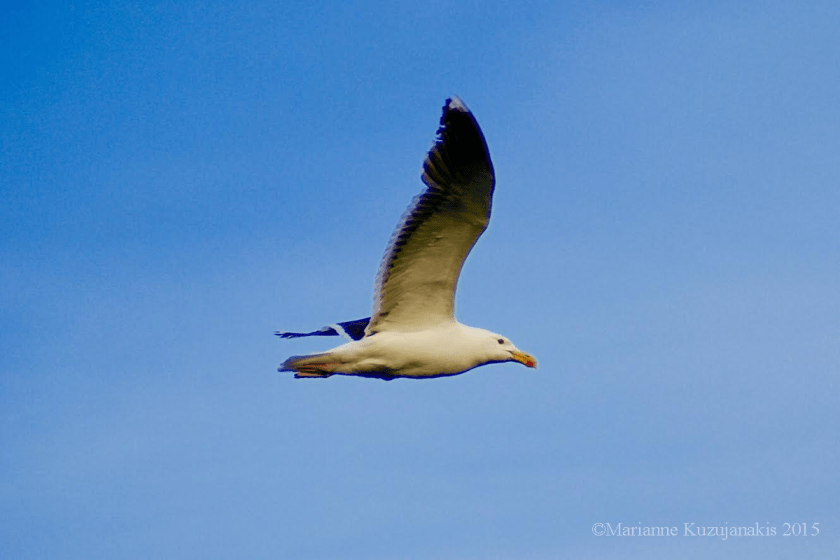
I will regret the day when and if I no longer look at the world like a child. To sadly no longer see a bird in flight and wish I too could fly.

Since that isn’t the case, I remain awestruck.

“The world is full of magic things, patiently waiting for our senses to grow sharper.” ― W.B. Yeats

[You can enjoy all the daily posts from the #30PostsHathSept bloggers HERE]

The Road Not Certain

Welcome to Day 26 of #30PostsHathSept. [PLEASE READ all my other challenge posts HERE.] Today I muse – at times seemingly randomly – on many things, and perhaps share some enjoyment along the way.

30PostsHathSept300x200sept2015-26

While traveling this week, I was reminded of a recent article in The Paris Review by David Orr that contains excerpts from his new book The Road Not Taken: Finding America In The Poem Everyone Loves And Almost Everyone Gets Wrong. Both the book and the article discuss Robert Frost’s poem of the same name.

All of us at some point in our childhoods and/or adulthoods learned (or at least tried to learn) this famous Robert Frost poem. As David Orr discusses in his article, everyone from advertising executives, songwriters, TV show producers, and authors have usurped the supposed concept of the poem in their works. Mr. Orr goes on to say,

“On a word-for-word basis, it may be the most popular piece of literature ever written by an American.”

Quite an accomplishment, especially as it is a piece of work that is only occasionally interpreted in the manner intended by the writer. The road not taken. Too often people jump on the idea that this poem is a call to individualism, a professed mantra to autonomy, and a nod to nonconformity. But Mr. Orr states,

“The poem isn’t a salute to can-do individualism; it’s a commentary on the self-deception we practice when constructing the story of our own lives.”

The road not taken. What Robert Frost may have actually meant is the polar opposite of what all the advertisers and others want their own messages to say. Do advertisers want the public to know that which road we choose is of lesser importance than what we may realize?

When you think about it, every decision we make can result in a myriad of outcomes (if indeed free will is involved in our every decision – a concept I touched upon in an earlier post HERE). Each outcome can further lead to yet other outcomes. Sometimes one may lay out a specific path for life, only to find obstacles on the road. Another person may find that an unplanned (and possibly unwanted) path can be life-changing in so many wonderful ways.

So, we’re not really discussing travel in the literal sense, though travel can be involved in any decision. Decision-making is a more universal concept. Move to a big city? Stay in a rural area? Ivy league university? State college? Make a midcareer move into another field? Self-employment? Marriage? Family? People often fear that any of these choices may warrant huge regrets down the line as well as lost opportunities.

Sometimes I think these fears may be even more acute with young people today. Kids are not given the opportunities to fail or always make their own choices. Are we not in some ways placing young people in a no-win scenario by touting the false individualism of Frost’s poem by media against a standardized rush to succeed to college? Can this conflict leave young people confused, or worse yet, frozen and cynical? I’ve heard people lament things like “How could I not get the job I wanted? I deserved it. I followed all the rules and went to the right schools.”

But life isn’t just a choice on a menu. Much uncertainty and gut-level decisions may be involved all along life’s entire path. This further reminds me of the lyrics to “Child of the Wind” by one of my favorite songwriters, Bruce Cockburn. He writes,

“There’s roads, and there’s roads,
And they call. Can’t you hear it?
Roads of the earth
And roads of the spirit
The best roads of all
Are the ones that aren’t certain.
One of those is where you’ll find me
‘Til they drop the big curtain.”

You can listen to the full song here:

Uncertainty. This is a difficult concept for most people. Being comfortable in uncertainty means being willing to let go and switch gears at any time, should opportunity, information, and/or chance come into view. Uncertainty can yield many new possibilities if we are open to seeing them. Uncertainty may also bring into focus the need to live now, and concentrate on today. This is mindfulness. We may all be familiar with the quote attributed to Ralph Waldo Emerson,

“Life is a journey, not a destination.”

This quote has much meaning, and more so as I witness many people eager to fill bucket lists and complete lists of “Things To See Before I Die” destinations. This is all well and good if the goals are more than just check-boxes. If the goals help one see their own lives in better perspective, and contribute to furthering them along the path to self-actualization, that’s ideal. If not, one may see the wry wisdom of Douglas Adams in his book The Ultimate Hitchhiker’s Guide to the Galaxy,

“Bypasses are devices that allow some people to dash from point A to point B very fast while other people dash from point B to point A very fast. People living at point C, being a point directly in between, are often given to wonder what’s so great about point A that so many people from point B are so keen to get there and what’s so great about point B that so many people from point A are so keen to get there. They often wish that people would just once and for all work out where the hell they wanted to be.”

Success too is not always a straight line. In fact, it often is not a straight line at all. In an article by Adam Dachis entitled “Success is a Squiggly Line”, he shows what is now becoming a classic image by Dimitri Martin of success.

18il6vwq78eurjpg

So, while I travel down the road (both the literal road and the road of life), the words of many of these individuals enrich me.

And what of the origin of the word travel itself?

Travel comes from the Middle English word travail, meaning a painful and laborious effort. The fact that the word travel was further originated by the Latin word tripalium, an instrument of torture, only adds to the idea that a good life requires effort. Life, well lived, can be just this. An examined life. A self-actualized life. A life of effort. A life that achieves the highest levels of Maslow’s Hierarchy of Needs.

Travel isn’t a frequent flyer membership. It’s a state of mind. For some, that means to explore one’s world by traveling to other cultures and countries. For others, that means deeply connecting to one’s own neighborhood or family unit. For yet others, that means delving deep within their own existence through the works of others and/or their own thoughts and ideas. All essentially involve making connections to others. We’re all traveling life together, that is our road. Within life – and travel – is also realizing that there can be great beauty in uncertainty.

The road not certain is the road we travel.

After all, Marcel Proust may have said it best,

“The real voyage of discovery consists not in seeking new landscapes, but in having new eyes.”

Or at least for some, having a TARDIS that may allow a re-do or two from time to time.

[You can enjoy all the daily posts from the #30PostsHathSept bloggers HERE]