Latest Posts

Some Words On Words

Welcome to Day 15 of #30PostsHathSept. [PLEASE READ all my other challenge posts HERE.] I hope this post gives you an even greater appreciation for words and language.
30PostsHathSept300x200sept2015-15

Words. Words. Words. What exactly are words?

The Merriam-Webster dictionary defines word as:

“A written or printed character or combination of characters representing a spoken word”

And,

“A speech sound or series of speech sounds that symbolizes and communicates a meaning usually without being divisible into smaller units capable of independent use”

But these definitions cannot even begin to contain that entity which we call WORD.

I love words, the flow, the music, and the personality that bursts forth. Sometimes a word can draw its own image. Tree looks like a tree, tall and firmly planted. Cloud looks like a cloud, rounded, billowy, and floating across our mind under its own power. Whisper is soft and quiet, just as we would expect it to be. Shriek, on the other hand, makes us cover our ears.

Words are so much more than sounds or hash marks on a page. Words are truly living breathing life forms. Words have their own genetic code, changing and evolving over time and distance. In a person’s lifetime, they will see the birth (and sometimes death) of hundreds of these life forms.

Do you remember that the word awful once actually meant something amazing? Or if someone called you nice, it’s as an insult to say you are foolish.

Where would we be without some of the common everyday words?

Take a look at these three words and a few of their first occurences.

Luggage:

“This is the strangest fellow, brother John:
Come, bring your luggage nobly on your back:”
[King Henry IV, Part I]

Radiance:

“In his bright radiance and collateral light
Must I be comforted, not in his sphere.”
[All’s Well That Ends Well]

Addiction:

“Since his addiction was to courses vain,
His companies unletter’d, rude and shallow,”
[Henry V]

Some say William Shakespeare coined between 1700-2000 or more words. Many were compound words, or even one of the techniques for which today’s wordsmiths are so famous: turning nouns into verbs. Shakespeare invented words like caked and gloomy and rant and so many others.

Many people have been involved in the evolution of language. Neologism is the term meaning new word. Sometimes neologisms are uttered by people with neurological conditions (such as stroke, schizophrenia, or autism), or even by children just learning to speak. The basis for forming words is part of our biological make-up.

Writers are famous for coining words. William Gibson, author of Neuromancer and many other wonderful books, in part gave our language words like cyberspace, netsurfing, and the popularized notion of the matrix. Catch-22 became part of standard language after the success of Joseph Heller’s book of the same name. Did you know the first printed appearance of the word nerd was by none other than the master of kid’s literature, Dr. Seuss, in his 1950 book If I Ran The Zoo?

And speaking of Dr. Seuss, who doesn’t know the meaning of the word grinch? Charles Dickens may have further gifted our language with the word scrooge, but did you know he also invented the word boredom in his book Bleak House?

Here’s author John Green in a video about 43 words coined by authors.

There are so many different types of coined words, including combination words (like football or starlight or eyeglasses), and blended words (themselves called portmanteau – a word coined by Lewis Carroll in Through the Looking Glass for words combined by fusing sounds and meanings together as one).

” ‘Slithy’ means ‘lithe and slimy’. ‘Lithe’ is the same as ‘active’. You see it’s like a portmanteau, there are two meanings packed up into one word.”

Portmanteau comes from the French words, porter (to carry) + manteau (coat or cloak). Thus, it’s a type of luggage and it’s related to one of Shakespeare’s words again!

Authors weren’t the only ones getting into the word-making business. Many presidents and politicians played a role. We’ve all said iffy at times when we were uncertain. For that, we can thank Franklin D. Roosevelt. Ever complain about someone sugarcoating the facts? Thank Abraham Lincoln for that word. Then there’s George W. Bush and misunderestimate. Not to be outdone is the winner of the 2010 Oxford University Press Word of the Year – 2008 Vice Presidential Candidate Sarah Palin and the word she made popular, refudiate.

Then there are the acronyms, many of which became so popular that we often forget their origin. Scuba, coined by Jacques Cousteau, is actually an acronym for “self-contained underwater breathing apparatus”. Your phone’s sim card is actually a “subscriber identification module”. Annoyed by captcha’s? You’re actually annoyed by “completely automated public Turing test to tell computers and humans apart”. Say that three times real fast.

The advent of computer texting has brought even more words to common usage, from YMMV to LOL and beyond. Author Lauren Myracle, about a decade ago, wrote a handful of books for young adult readers using only texting language. Their titles include bff, ttfn, ttyl, and L8r,g8r.

People like Facebook’s Mark Zuckerberg (Facebook is another combination word) have even publicly stated that in the future, artificial intelligence may surpass humans at articulating emotion, perhaps making language unnecessary (or at least less accurate) in some cases.

The search engine used everyday by everyone is actually a coined word of a coined word. The name Google was a variation of the word Googol, a number representing 1.0 x 10100. An elementary school boy who was the nephew of mathematician Edward Kasner had coined the word Googol. The young man’s job: To coin a name for a really big number. Googol fit the bill for him. How about you?

All of you can make your own words. New words come into our vocabulary everyday. Any one with a love for words can develop their own. A book entitled Microstyle: The Art of Writing Little may help you begin. You can also enjoy the website WordSpy to hear all about new words.

After all, if you think it’s impossible to coin words, remember that the author J.R. R. Tolkien developed a number of entire languages, complete with grammar rules, as a supplement to his Lord of the Rings series.

So where is language going in the next 10-20-50 years? It’s hard to say, but one thing is certain: Noah Webster would likely be thrilled to see such an active interest in words and the evolution of language.

I leave you with this TED.com video on how texting is changing both language and words…and that’s not necessarily a bad thing.

[You can enjoy all the daily posts from the #30PostsHathSept bloggers HERE]

Why I Homeschool

Welcome to Day 14 of #30PostsHathSept. [PLEASE READ all my other challenge posts HERE.] Enjoy!

30PostsHathSept300x200sept2015-14

To understand the real reason why I homeschool, I can’t just talk about my child’s school experiences. I need to go back to my own. All the way back to my elementary school.

I loved my old school. Deeply. It was in a part of town that was anything but affluent, but what the school may have lacked in funding it made up in so much more. The school was unique, though at the time I didn’t know it. There were no grade levels. Students could choose their own schedules, their own classes. They could do what they wanted to do. One student could decide they wanted all art and science classes, while another literature and history. I was a student who loved math and writing. I loved having the right to choose. It was exciting to learn right alongside the bigger kids.

Mrs. Jackson was my favorite teacher. Maybe she was my favorite because she paid attention to me. But most of all, she engaged me in learning and guided me when I needed advice. I always knew I could count on her to inspire me and show me the best in myself.

School was like one big community. Everyone came together to learn because it was a place where everyone was engaged. The classes were as challenging as you wanted them to be. My school was part of a 1960’s experimental approach to education. I couldn’t imagine a more wonderful place to be.

A few years later, my family needed to move. That’s when my world changed for a long time. My new school didn’t feel like my old school. The kids didn’t feel like my kids. I was prevented from doing what I wanted to do and prevented from moving ahead as fast as I needed.

I argued, but no one wanted to hear what an elementary student wanted to say. Still, I did what was required of me, and followed their rules, for as long as I had to. I waited for many years. Every now and then for fun, I did writing assignments that my brother, two grades above me, was assigned. One such assignment that I recall was: ”Write a two-page essay discussing the following quote by John Donne”.

“No man is an island, entire of itself; every man is a piece of the continent, a part of the main.”

I wouldn’t know for many years the personal significance this quote held. At the time, I was thrilled just having something to do.

But in this new school something else was missing. My new teachers were not like Mrs. Jackson and it would be many years before I found a teacher like her.

Back in my old neighborhood, Mrs. Jackson would tell me how I could reach for any goal I set my mind to. She told me that it was O.K. to break and bend rules when the rules were wrong. She told every one of us that we were special and that each of us had an important job to do. She looked us in the eye when she spoke to us, and it always felt as if that moment was the most important moment of her day. I’ll never forget her and the valuable lessons she taught me.

Educators like Mrs. Jackson change lives. Educators like Mrs. Jackson engage kids not just for one class or for one year. They engage the kids for a lifetime. Listen to educator Rita Pierson’s powerful talk on TED.com entitled “Every kid needs a champion”

So what exactly does this have to do with why I homeschool?

EVERYTHING.

When we first enrolled our now teen son into kindergarten many years ago, it was with the same warm memories of my own early elementary schooling. But it didn’t go that way.

The school didn’t understand my gifted son’s enthusiasm for learning, his energetic passion to discover, his earnest desire to engage with everyone and everything around him. It seemed as if they could only see in him someone who didn’t fit the rules of what their worldview told them about children. They wanted to label him instead of educate him. He was an outlier. But isn’t every child who feels out-of-place, unrecognized, ignored, and unsupported, an outlier in some way? I’ve previously written a bit about his early educational experiences HERE.

In retrospect, our decision to homeschool was nothing more or less than a travel back in time to an education very similar to my own. There are no grade levels. My son chooses his own schedule, his own classes. He can do what he wants to do. He always loves having the right to choose. My son is engaged in learning.

In a sense, what Mrs. Jackson did right, and what my son’s kindergarten did wrong, comes down to one word: ENGAGEMENT. If I kept my son in school any longer than I did, I fear it may have been as Rita Pierson said in her talk,

“Kids don’t learn from people they don’t like.”

Kids know very quickly when someone cares – often far more quickly than do adults. Kids can’t easily pretend to engage with people who do not seem to care.

I’m not touting homeschool as the answer for all kids. There are wonderful educators to be found in schools everywhere. Unfortunately, educators’ time is becoming more limited, making it increasingly difficult to stop and be attentive to the little things.

As we all know, it’s always the little things that make a difference. The little things can engage a child’s heart and mind. A smile, a kind word, a moment that lasts a lifetime.

John Donne’s words couldn’t feel more perfect. We are all indeed part of a great whole. A great community. Each of us – adult and child – has an important job to do.

Regardless of whether you already homeschool, plan to homeschool, are in a school with adoring teachers, or in the midst of a difficult situation without a clear path…If you remember only one thing, and one thing alone, remember this: ENGAGEMENT.

Nothing matters but engagement to a student’s learning. They need the sense of belonging and being special, loved, and supported. If we can engage a generation of students in whatever form of education – traditional or homeschool – we would make all the Mrs. Jackson’s of the world very proud. Every student deserves to feel that each time they connect with a teacher, that moment is the most important moment of that teacher’s day. For that student, that moment may be more important than the teacher could ever imagine.

If there is no engagement, then the educational setting may be a mismatch and in need of change. For our family, this meant homeschooling. Simple as that.

We all depend upon each other. We are parts of a whole. As such, we can be our best selves by showing children their best selves.

Because…“No man is an island, entire of itself.”

[You can enjoy all the daily posts from the #30PostsHathSept bloggers HERE]
Disconnect To Reconnect

Welcome to Day 13 of #30PostsHathSept. [PLEASE READ all my other challenge posts HERE.] I hope you find this informational!

30PostsHathSept300x200sept2015-13

I’ll come right out and say it: Just face it…In today’s digitized and busy world you’ll never get all your work done, all your emails read, all your ideas realized, or all your hopes for productivity fulfilled.

Welcome to reality.

By the end of 2015 it is projected that 4.1 billion people around the world will have email accounts. With an average of 125 emails for each recipient per day, that amounts to over 512 billion emails sent daily.

Researchers in 2012 estimated people spend 28% (3 hours per day) of the day reading, deleting, and answering emails.

Add to this the time involved in instant messaging (estimated by the end of 2015 to grow to 3.8 billion accounts), and social media (Facebook, Twitter, LinkedIn, Instagram, etc) at nearly 4 billion users.

While landline phone usage may be dwindling, smartphone users worldwide exceed 2.6 billion people, with projections of 6.1 billion users by 2020. That’s over 70% of the population of the entire planet.

Yes. I get it. We’re all connected. But are we really connected?

Add to this the 24/7 mentality of productivity and the term “wired” connotes far more than the transfer of information digitally via the Internet. We are becoming wired in more ways than one. The tense and edgy state so many of us live in on a day-to-day basis is undoubtedly affecting our general well being.

Technology definitely has numerous positive uses, with more being developed everyday. One can find endless articles about the amazing progress in computer technology. But is the constant connectedness a good thing?

Would adding downtime to our hectic schedules be a healthy move forward? Are we, in some sense, avoiding introspection?

Researchers are beginning to look into the negatives of not disengaging and disconnecting. The New York Times held a debate in 2013 on the rise in narcissism with frequent computer use. Dr. Sherry Turkle, the Abby Rockefeller Mauzé Professor of the Social Studies of Science and Technology at MIT, in her book Alone Together: Why We Expect More from Technology and Less from Each Other, explores the confusion between virtual relationships and real relationships. There is also a focus on the development and nurturing of outward identities, at the cost of inward self-awareness.

There are also growing concerns of a possible diminishing of empathy with technology use, and how that may bode for future relationships. Children may be at risk in two ways. Their developing brains may be more susceptible to technology, but they are also watching adult’s sometimes excessive habits.

Adults do have problems reining in their technology habits.

Science, the journal of the American Association for the Advancement of Science, published an article in 2014 in which participants in a series of eleven studies showed that not only did 83% state they spend zero time “relaxing or thinking” when external tasks were removed, but when placed in exactly such a situation, 57.5% felt it difficult to concentrate, 89% felt their minds wandering, and nearly half didn’t like it at all. The majority (67%) of men in the studies, when given a choice between receiving $5 to spend 15 minutes in quiet thought or giving themselves an electric shock to avoid the 15 minute period, chose to give themselves the shock.

Kate Unsworth, CEO of Kovert Designs, recently did a study on 35 CEOs to examine their behavior on and off of technology. Her results were interesting. She was able to show that after three days without technology, the CEOs were more empathetic, more relaxed, and more likely to engage using eye contact with others in the group. Memory also seems to improve when access to Google is eliminated. Not a surprise, given that studies have found negative effects on memory recall in the presence of increasing Internet use.

Our sleep may also be adversely affected by technology, as the blue light involved in artificial lighting suppresses melatonin production, the hormone that assists our sleep.

We know free time to allow one’s mind to wonder is a stimulus for creativity. This isn’t news. Many successful people in history reserved time for socialization and downtime. A study by Stanford University found walking increased creative thinking.

So what is a person to do?

• Set a firm schedule for your digital use whenever possible. For example, schedule social media and email for specific times each day and do not feel tempted to break your rules.

• Find physical outlets such as walking to prompt spontaneous creativity or resolve problems that have left you stuck. Other forms of exercise are excellent choices, unless you tend to use technology while exercising.

• Music listening is one excellent form of technology that can stimulate creativity, not inhibit it.

• Begin a creative hobby. Some people find they can actually think better and more deeply when playing an instrument, knitting, painting, or a variety of other methods of creative expression.

• Stop using technology at least 1-2 hours prior to bedtime, so that the negative effects of blue light are diminished. Consider also changing your bedroom light bulbs for ones that block the blue light spectrum. Some believe blue light-blocking glasses might benefit sleep, though studies are incomplete.

• Try digital detox weekends. Instead of spending time online, strongly consider spending more face-to-face time with friends and family. Spend time on your own as well doing some of the items already mentioned above.

• If you are a parent, please put your technology away as much as possible and interact in a real sense with your children. Play together and share hobbies, exercise, and walks.

• Consider a meditation program. So many studies confer a positive effect on brain functioning and emotions. Mindfulness alleviates stress, and can play a role in inflammation reduction.

• Rid your surroundings of excessive distractions by adopting a motto of “Simplify”.

• Be realistic in what you can accomplish each day. Strive for prioritizing.

• Nurture and protect downtime in your lives, away from technology. Take some time to focus on your inner thoughts to inspire creativity.

• Finding time to rest and do nothing can be both creative and life-changing. Don’t allow technology to own you. Take control of your lives again. Connect!

Good luck!

[You can enjoy all the daily posts from the #30PostsHathSept bloggers HERE]
The Rules Of Mind

Welcome to Day 12 of #30PostsHathSept. [PLEASE READ all my other challenge posts HERE.] Today I muse about many things. Enjoy!

30PostsHathSept300x200sept2015-12

Roughly a decade ago, when I first saw the videos of the creatures called Strandbeest, I was utterly mesmerized.

With guidance from the wind, these beasts of yellow plastic piping walk alone along the beaches in the Netherlands. Some only intermittently require wind, storing energy in man-made bottle bladders. I’m looking forward to their arrival on the Atlantic shores next week for their first major U.S. exhibition. Learn more about them HERE, HERE, and HERE. Their creator, Theo Jansen, discusses them in this amazing TED.com video.

Theo Jansen is a Dutch artist trained in physics and engineering. He treats his creations as true life forms, having the equivalent of a very simple brain that can monitor its surroundings. Terms he uses in describing them include evolution and DNA, and they are given elaborate Latin-derived genus and species names such as Animaris Percipiere and Animaris Suspendisse.

To Mr. Jansen, his creatures are sentient.

But what is sentience? The Oxford dictionary states that sentience is being “able to perceive or feel things.” Feeling. A concept that is separate from thinking. A consciousness. We have computers that can out-match human minds in speed and accuracy, even competing successfully against humans in many activities including chess and Jeopardy. We have computers that drive cars for us. But as far as we can tell with what we understand today: they cannot feel – only think.

Do they have a mind?

Siri speaks to millions every day on iPhones, guiding humans to destinations, offering recommendations for dinner, answering even the most obscure questions, while occasionally even joking along with us. She sounds like a good friend…but it’s all about algorithms, is it not?

Science fiction is inundated with similar life forms, robotic in nature, yet – by the magic of Hollywood – granted just a bit more something. Everyone has their favorites, and for me those include C-3PO, WALL-E, HAL (of 2001: A Space Odyssey), Doctor Who’s time-traveling TARDIS, and the one I hold most dear – Data of Star Trek: The Next Generation.

Star Trek: Next Generation’s episode “The Measure of a Man” is one of my most favorites in the entire series. In it, Data is forced to argue for his right to self-determination (i.e. by proving his sentience), or else be declared as property to be placed at the mercy of human Starfleet researchers. Here is the most poignant portion of the episode, where the prosecution witness is being questioned on what determines sentience.

Intelligence. Self-awareness. Consciousness. These are the specific criteria brought up in this episode as essential components of sentience. Criteria associated with having a mind. It goes on to say that sentient beings should have “the right to choose.” Thus, free will.

But then we get into the sticky topic of free will. This implies freedom, and even within the human race this simple criterion has been broken time and again against our own species. Slaves. Prisoners. Others. So many people oppressed over many thousands of years and/or denied their free will. To make the issue even more complex, some researchers are even determining that free will, as we believe it to be, may not even exist. But I digress.

Back to sentience.

We haven’t even touched upon how the human race treats other species. Discussions regularly relate to animals and animal rights. The use of animals as food, lab experiments, and so much more. But where along the line of animal species is the topic of animal rights not a point of contention? When the animal doesn’t appear similar to us (i.e. has two eyes, a nose, and a mouth)? What of creatures like the octopus, so alien in appearance but essentially a living brain?

What too of plants? Are they sentient? Years ago, while watching David Attenborough’s BBC documentary The Private Life of Plants (sadly not available in DVD in the U.S.), I was astounded by the purposeful movements and activities of plants, the territory battles and the will to survive, all visible to us only in time-lapse photography. Plants live on a time scale far different than ours, yet I can’t begin to answer whether they are sentient. I don’t even know whether we should be asking this question.

It’s obvious our world is making rapid advances in computers and engineering. Unfortunately, it sometimes seems we haven’t yet even achieved an understanding of the natural world around us, nor have we learned respect for sentient life. Understanding this present world is a necessary prerequisite to addressing a future world of artificial intelligence.

The day will surely come when engineering and technology produce a being that is capable of not just thinking, but also having self-awareness and consciousness. A day when they develop minds. But what we do as humans when that day arrives says far more about us than about the beings we create. Captain Jean-Luc Picard, in “The Measure of a Man”, said,

“A single Data is a curiosity. A wonder even. But thousands of Data’s,…isn’t that becoming a race? And won’t we be judged by how we treat that race?

These discussions should (and will) be ongoing. Dr. Stephen Hawking and Elon Musk have already voiced their concerns on artificial intelligence. Other researchers are meanwhile trying to better understand the basis of consciousness. While we wait, we need to take a look at ourselves and begin in earnest to address our contradictions, failings, and role in the world of today.

Will we be ready for tomorrow?

[You can enjoy all the daily posts from the #30PostsHathSept bloggers HERE]

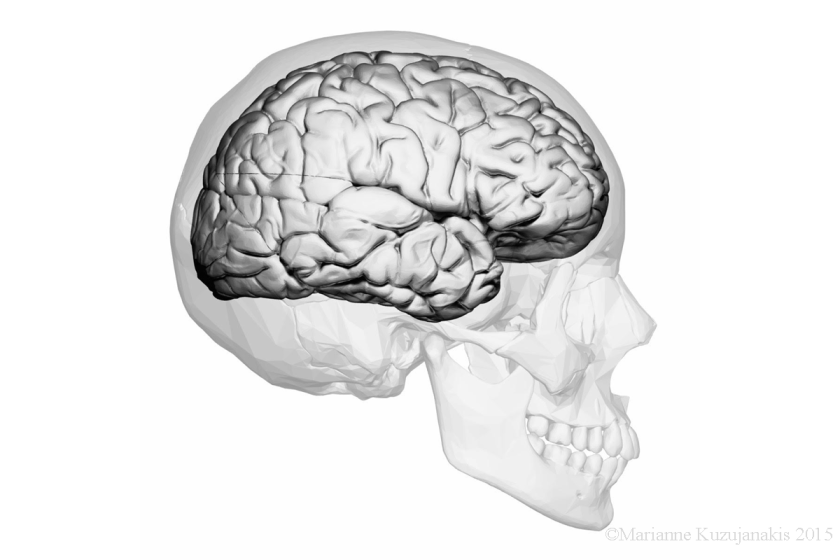
Feature image attribution: Image altered from original found at: “BodyParts3D, © The Database Center for Life Science licensed under CC Attribution-Share Alike 2.1 Japan.”

OE’s, Oh,No!…OE’s, Oh,Yes!

Welcome to Day 11 of #30PostsHathSept. [PLEASE READ all my other challenge posts HERE.]
Today’s blog is also part of Hoagie’s BLOG HOP on DABROWSKI’S OVEREXCITABILITIES. Enjoy!

30PostsHathSept300x200sept2015-11

How can anyone explain Dabrowki’s overexcitabilities in a new and fresh way?

Dr. Kazimierz Dabrowski, in his seminal work on personality development entitled The Theory of Positive Disintegration, included within it the first discussion of his observations that would from then be referred to as overexcitabilities (literally translated as superstimulatabilities). These overexcitabilities (or OE’s), when explained simply, are the corporeal sensations – both psychologically and neurologically – experienced by gifted individuals in their interactions with their external environments.

A large number of people, many of them specialists in the gifted field, have already articulated the experience of those with OE’s. I’ve included a few of my most favorite links at the end of this post.

blog_hop_sep15_overexcitabilities_small

Gifted individuals – especially those at the highest levels of ability – seem to have the ability to function as specialized and highly sensitive receptacles for incoming stimuli. Human Geiger counters, so to speak. They see, hear, sense, feel, think, imagine all to a degree that is often completely invisible to others. With these intensely tuned perceptions, they can then create, innovate, perform, and astound. They can also deeply suffer.

While OE’s may not be the equivalent of superpowers, some people like to think of them in that way. However, the potential negatives associated with OE’s cause many gifted individuals to struggle, sometimes their entire lives, in coming to terms with them. Having these super senses can unfortunately make these individuals feel vastly different from others, and thus always in search of a way to fit in. Some never truly find their tribe.

Dr. Dabrowski, in a portion of his poem entitled “Be Greeted” – a poem I highly recommend everyone read in its entirety – he writes:

“For your awkwardness in dealing with practical things, and
for your practicalness in dealing with the unknown things,
for your transcendental realism and lack of everyday
realism,
for your exclusiveness and fear of losing close friends,
for your creativity and ecstasy,
for your maladjustment to that ‘which is’ and
adjustment to that which ‘ought to be’,
for your great but unutilized abilities.”

Pearl S. Buck, author and 1938 Nobel Prize winner in Literature, described with accuracy the experience of a creative mind in this passage of her speech.

“The creative instinct is, in its final analysis and in its simplest terms, an enormous extra vitality, a super-energy, born inexplicably in an individual, a vitality great beyond all the needs of his own living – an energy which no single life can consume. This energy consumes itself then in creating more life, in the form of music, painting, writing, or whatever is its most natural medium of expression. Nor can the individual keep himself from this process, because only by its full function is he relieved of the burden of this extra and peculiar energy – an energy at once physical and mental, so that all his senses are more alert and more profound than another man’s, and all his brain more sensitive and quickened to that which his senses reveal to him in such abundance that actuality overflows into imagination. It is a process proceeding from within. It is the heightened activity of every cell of his being, which sweeps not only himself, but all human life about him, or in him, in his dreams, into the circle of its activity.”

Gifted individuals with OE’s tend to experience several, if not all, of the following five categories of overexcitability. The interactions between the strengths offered by each category described can contribute further to more potentially profound accomplishments. The weaknesses, however, can combine to produce sensations that may place a gifted individual at a risk to himself or herself.

CATEGORIES OF OVEREXCITABILITIES:

PSYCHOMOTOR: This is expressed as a heightened motor excitability, leading one to greatly need to utilize motor muscles (movement, speech). These individuals appear highly energetic and talkative, causing them to be at risk for ADHD misdiagnosis. The motor strengths can also lead them to perform at the highest levels in sports, the arts, and other realms.

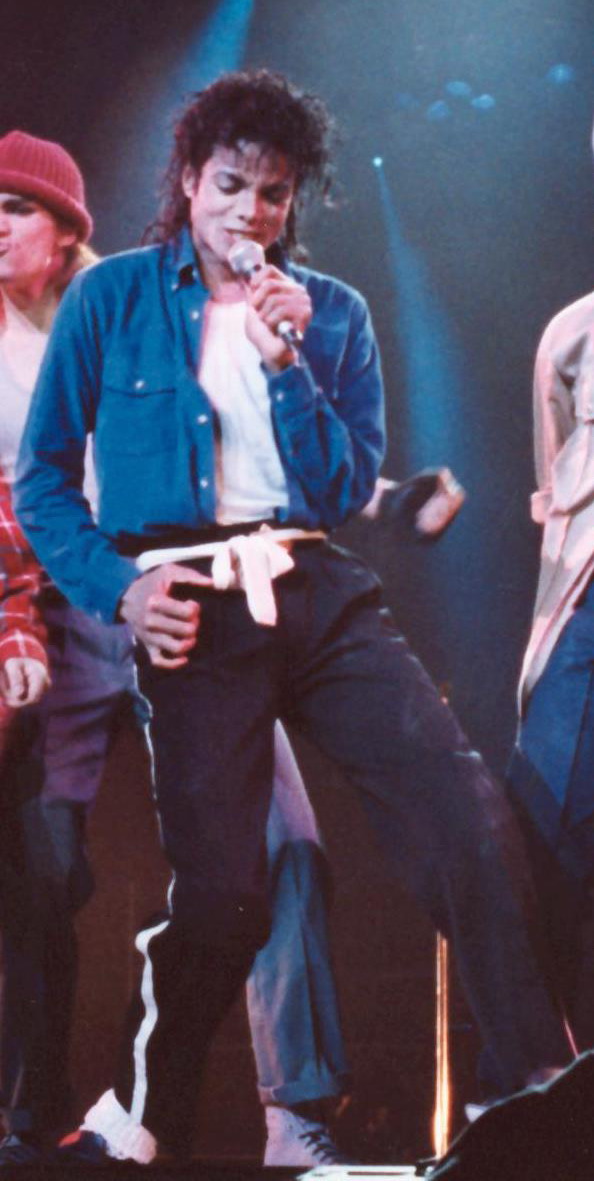
Michael_Jackson-3
“On many an occasion when I am dancing, I have felt touched by something sacred. In those moments, I felt my spirit soar and become one with everything that exists.” – Michael Jackson, recording artist

EMOTIONAL: This is expressed as a heightened emotional excitability, leading one to experience emotions to an immensely deep level. Individuals show amazing empathy and compassion, but also experience within themselves the fullest range of emotions from highs of ecstasy to profound lows of depression. Maintaining a sense of balance and control over the over-arching emotions can be a difficult life journey.

Vincent_van_Gogh_-_Self-Portrait_-_Google_Art_Project_(454045)

“The emotions are sometimes so strong that I work without knowing it. The strokes come like speech.” – Vincent Van Gogh, painter

SENSUAL: This is expressed as a heightened excitability of the five senses, leading one to perceive their surroundings to a level unimaginable to others. Discordant sounds, colors, tactile materials, tastes, and smells may cause a great degree of discomfort. On the other hand, pleasing sensations can lead to deep satisfaction and joy. Their discriminatory perceptions can further lead them to create remarkable artistic and musical works, and to excel in fields requiring their high level of skills.

816px-Wolfgang-amadeus-mozart_1
“The music is not in the notes, but in the silence between.” – Wolfgang Amadeus Mozart, musician

INTELLECTUAL: This is expressed as a heightened excitability in the pursuit of knowledge, as it pertains to a better and more thorough understanding their world. They strive to comprehend all aspects of a problem, and focus on solving some of the greatest issues of society. These individuals can be innovators and visionaries, but can also be burdened by the fallibilities of humanity and the deep unfairness of the world and devastating world events.

RichardFeynman-PaineMansionWoods1984_copyrightTamikoThiel_bw
“You see, one thing is, I can live with doubt and uncertainty and not knowing. I think it’s much more interesting to live not knowing than to have answers which might be wrong. I have approximate answers and possible beliefs and different degrees of uncertainty about different things, but I am not absolutely sure of anything and there are many things I don’t know anything about, such as whether it means anything to ask why we’re here.” – Dr. Richard Feynman, physicist

IMAGINATIONAL: This is expressed as a heightened excitability of imagination, leading them to be world-builders via story and art. They may be divergent in thought and profoundly creative in expression. They also may be visionary, dreaming of a more utopian world, but may sometimes become bogged down in fantasy to the exclusion of reality.

Pablo_Picasso,_1916,_L'anis_del_mono_(Bottle_of_Anis_del_Mono)_oil_on_canvas,_46_x_54.6_cm,_Detroit_Institute_of_Arts,_Michigan
“Everything you can imagine is real.” – Pablo Picasso, artist

OE’s are real. Awareness of OE’s is essential to the proper social and emotional support of gifted individuals. Gifted individuals are too often shunned, isolated, erroneously labeled, and made to feel broken through their experiences with OE’s.

Gifted individuals with OE’s are not broken. They are not, however, ordinary.
They have the capacity within them to be… EXTRAORDINARY.

This article, re-titled as “The Intensities of Giftedness”, also appears in The Huffington Post HERE.

ADDITIONAL READINGS & VIDEO & BOOKS

“Dabrowski’s Theory of Positive Disintegration: Some implications for teachers of gifted students”. Sal Mendaglio, Ph.D. (2002, SENG).

“Overexcitability and the Gifted”. Sharon Lind (2001, SENG).

“The Excitable Ones”. Lisa Rivero (March 2015, Mensa Bulletin).

“Dabrowski’s Over-excitabilities: A Layman’s Explanation”. Stephanie S. Tolan (1999).

The Java Shoppe Interview With Prof. Kazimierz Dabrowski (1975).

Dabrowski’s Overexcitabilities. Global GT-Chat/TAGT (2015).

Dabrowski Congress. Calgary, Alberta (2016).

Mellow Out, They Say. If Only I Could. Michael M. Piechowski, Ph.D. (2nd Ed. 2014).

Living With Intensity. Susan Daniels, Ph.D. & Michael M. Piechowski, Ph.D. (2008).

[You can enjoy all the daily posts from the #30PostsHathSept bloggers HERE]
NOTE: Hoagies Overexcitabilities Blog Hop graphic created by Pamela S Ryan.

When Anger Rears Its Ugly Head

Welcome to Day 10 of #30PostsHathSept. [PLEASE READ all my other challenge posts HERE.] I hope you find this information helpful.

30PostsHathSept300x200sept2015-10

Ever wake up in a bad mood and with no distinct reason why? Ever snap at a spouse or criticize your child in a voice that is less than controlled? Did that moment of frustration grow ever larger until you felt your insides boiling?

Anger.

Disagreements. Conflicts. Misunderstandings. Hostilities. Prejudice. Discrimination. Violence. War. Anger is everywhere. The constant media makes it appear, whether it’s true or not, as if there is more anger now than ever before.

One thing is certain…there are more people than ever before. But there’s always been anger. Anger has fought all the wars. All the Crusades. It’s oppressed and enslaved entire populations. Anger has taken out vengeance on countless others. It’s brought destruction upon the world. Yet, anger may have a great – and positive – role.

Anger isn’t just a simple on-off switch. One can be disappointed, annoyed, or frustrated, yet not bitter, seething, or enraged. Understanding the significant differences in levels of anger is not only helpful to adults, but perhaps in some ways more so to children who are just learning to handle emotions for the first time. Anger is also a message.

We know anger stems from the flight or flight reaction, whereby our autonomic nervous system releases the adrenaline type hormones of epinephrine and norepinephrine in response to a perceived threat to our survival. It’s a hard-wired instinctual response that, when used properly in a circumstance where the chance of survival is at stake, can indeed be a key in survival. But in usual circumstances of daily life for most people, it can be the equivalent of employing rocket fuel to boil an egg.

Mark Twain, author and observer extraordinaire of the human condition, once said,

“Anger is an acid that can do more harm to the vessel in which it is stored than to anything on which it is poured.”

But is all anger harmful? After all, anger is an emotion. Emotions are intrinsic to all of us. Anger, however, is not a primary emotion. For example, when a small child is having a temper tantrum or a teen lashes out at a teacher or other adult, anger isn’t the core component. Anger is the wayward expression of a deeper emotion. These deeper and more primary emotions in part include fear, guilt, sadness, grief, hunger, thirst, fatigue, pain, and injustice. Sometimes anger is directed outward, but many times it is inwardly directed towards self.

Anger has been called by a number of people “an energy”, a phrasing made popular in 1986 by the song Rise by Johnny Lydon and Public Image Ltd. There may be much truth to this. Anger can, if channeled by constructive means into progress, and via problem solving and the recognition of the underlying emotions responsible, be a major force of change. We have seen this in large scale in the battle for women’s rights, civil rights, and a variety of other causes. 2014 Nobel Prize winner, Kailash Satyarthi, a powerful children’s rights activist, discusses how peace can be achieved through anger in this TED.com video.

An unfortunate side effect of society’s distaste for anger is that children, beginning in early childhood, learn that anger is not an acceptable emotion. For most people, this attitude against anger continues throughout adulthood. The problem with this approach is that what results is a poor understanding on how to control anger in a healthy way (by not repressing it), and a deficiency in properly expressing the primary emotions underlying anger.

The repression of anger is indeed like the Mark Twain quote mentioned earlier. Many studies have cited the many ill-health effects of repressed anger. These in part include high blood pressure, heart disease, cancer, digestive issues, depression, insomnia, headaches and migraines, chronic pain, fatigue, and skin rashes. Anger, when unchecked, may also lead to criminal acts, violent acts and abuse, job losses, school problems, substance abuse, relationship issues, and accidents.

So what is the best approach to anger?

Several steps I propose include:

FIRST…DON’T MIRROR ANGER: Emotions are a social behavior, seen not just in humans, but also in all mammals. Smile and others smile. Yawn and others yawn. The same is true of anger. Do not allow anger in others to provoke anger in you, and vice versa.

PATIENCE: Typically we hear the mantra of “count to ten” or “take three breaths”. There is much wisdom in doing so. The short pause helps to collect thoughts and allow us to become more in touch with inner emotions and the significance of the situation.

UNDERSTANDING: This entails both an understanding of self, and one’s primary emotions, as well as an understanding of the other person or persons. The specific situation. Their underlying concerns and emotions. Especially in a family, it is important to freely be able to verbally express concerns with accuracy and honesty. Having a working vocabulary of emotions can translate to better relationship management outside of the family.

COMPASSION: Merriam-Webster defines compassion as a “sympathetic consciousness of others’ distress together with a desire to alleviate it.” This directly refers to the idea of first understanding the other’s emotions, and then taking the step further to relieve that distress.

FORGIVENESS: We cannot hold onto past grievances or hold one up to past behaviors and expect change. We can’t generalize behaviors and attitudes of groups and nations. It isn’t uncommon to fall into old patterns of behavior when confronted with seemingly similar situations. Only calm communication can clarify the underlying emotions involved in any difficult situation.

OPTIMISM: To be able to fully move forward from anger, we need to be able to see a horizon where there is hope for change. Stories of POWs, held for years by captors, yet able to not just survive but also to move forward without anger are a testament to the power of optimism and hope. Not seeing beyond the past to a better and more positive future will not vanquish anger nor provide a means to progress.

PURPOSE: With anger there is often a feeling of helplessness. People in this position feel defeated and depressed. They cannot see opportunities nor can they see a resolution in their situation. Finding that purpose and utilizing optimism to regain sense of hope can release them from anger’s hold.

NOTE: If you feel you cannot control your anger on your own, or find a loved one cannot do this for himself or herself, please seek the advice and help offered by mental health specialists who can teach techniques and provide therapy to bring you and/or your loved ones to a place of peace and hope. Should you feel unsafe in an anger-fueled situation or relationship, immediately seek shelter and request help.

Additionally, there is a technique proven to help not just anger, but anxiety, depression, and focus, as well as contributing to our well-being and resulting in positive health effects. That technique is meditation. Biochemistry-trained Buddhist monk Matthieu Ricard has a brilliant TED.com video on The Habits of Happiness.

Until tomorrow, I leave you with this…

[You can enjoy all the daily posts from the #30PostsHathSept bloggers HERE]

My Brother – My Heart


30PostsHathSept300x200sept2015-9

Today may be my most difficult post of the month. September 9th is my dear brother Greg’s birthday. Today he would have been fifty-six years old. But two years ago, he sadly and unexpectedly passed away.

Words can never transcribe with complete accuracy the feelings of those who grieve. The process differs for each of us. Within differing cultures, the entire grieving process as well as the interval of mourning is frequently based upon unique traditions. A few traditions, such as that of the Torajans described in detail in Kelly Swazey’s TED.com video , may even appear shocking or uncomfortable.

Grieving requires closure, and that closure comes through a variety of means. Some bury their dead underground. Some, above ground. Some have large bonfires or cremations. Some celebrate their lives in a loud party atmosphere, while others mourn quietly. It wasn’t so long ago that some families kept the deceased in open caskets in their homes and living rooms for a period of time after death. A few of you, as I do, may have old family photos showing this in practice.

But ultimately, what is death?

That’s certainly not a question I am qualified to answer. Theologians, scientists, philosophers have all attempted to elucidate the transition between life and not-life. As a child, despite being raised in a religious atmosphere, I imagined us as a great experiment being observed inside a massive Erlenmeyer flask by a giant society with a curiosity not at odds with our own. Philosopher Stephen Cave tries to address death in his TED.com video about general narratives told across cultures.

One thing that seems to be the common thread throughout all belief systems and non-belief systems is that death, and the subsequent process of grief, is an act of community. The community may be vast or as small as two people. For without community, there is no real grief. The grief is for the living. The grief is a means by which we build resilience and hope.

The specific details of my brother’s life, his deep passions, his imperfections (yes, we all have our own), his intensities, and the colossal generosity of his heart are all of lesser importance to those who did not know him. Everyone who has suffered losses carries with them their own meaningful memories of the people they loved.

Memories are the essence of what makes us human. Look at an old photograph of a person you do not know. What do you feel? What memories are conjured up by examining the image? We put our own experiences into how we navigate the world and feel emotion. Looking at that old photograph we may place a spark of someone else’s life, someone we do know, into the photo paper or tintype. We feel connected, like a community. Grief comes from this recognition.

Memory is a vital force within us. Perhaps it’s one of the most essential definitions of what makes us who we are. Within memory exists every experience we have had and will have. When we sense a particular smell, such burning wood, some people may be transported to a childhood camp or to a family vacation. All the associated memories of that time are then ignited. Others can be transported to another time by the smell of fresh cut lawn or by a breeze carrying the fragrance of magnolia blossoms or honeysuckle.

Grief is closely intertwined with our memories. We can be transported in the same ways to different aspects of a beloved one’s life through images, words on an old letter and card, or an item that reminds us that person. Recently, I was deleting my old cell phone messages only to find one from my brother that I had saved and forgotten. He was singing Happy Birthday. He never forgot a birthday, even when I was unavailable to take the call. Comparable to shooting stars we make wishes upon, these memory-filled moments bring our loved ones close. Like the magnolia blossom.

But something is still missing in my understanding of death and grieving. Our senses are simply the transport mechanism for our memories. Our memories are data points along a vast cerebral highway. My thoughts now bring me to possibility that what we were all taught about our five senses may be somewhat wrong or incomplete.

It is my theory that there is a sixth and far more powerful sense, through which all the other senses both operate and pale in comparison. This sense may be the command center for how we interact with all our senses. It may be as vital as memory itself, and as key to what makes us human.

This new sense…our HEART.

So Happy Birthday Greg, my beloved brother. From all my heart.

As you all go through your own day, please stop to hug your loved ones. Tell them how much they matter…to YOUR HEARTS.

[You can enjoy all the daily posts from the #30PostsHathSept bloggers HERE]

Boredom: Is Resistance Futile?

Welcome to Day #8 of #30PostsHathSept. [PLEASE READ all my other challenge posts HERE.] Perhaps this post will provide you with some new – and needed – information. Enjoy (if you have the time)!

30PostsHathSept300x200sept2015-8

Ask almost anyone to define boredom, and you’ll receive comments that range from “a waste of time” to “feels like Dante’s circles of hell”. With time quantified to what seems like the millisecond, boredom becomes the enemy. Many see boredom as the wall separating success from failure.

And since no one wants to fail, we fill our schedules with appointments, classes, work, volunteering, and errands. Some of us choose to blog on our activities, sometimes even as a personal record of accomplishments.

But isn’t boredom at its core simply the state of being in downtime? And downtime – when we do find it – more often than not is now filled with other demands such as more work, exercise, video gaming, social media, more errands, and the consumption of other forms of media such as TV and movies.

We’re all familiar with the phrase “There’s an app for that!” Well, fear not, there is a new one just for you. This week, researchers in Spain will unveil the first smartphone app that alerts you if you are bored. You can also listen to a report about the app.

An app…Because no one wishes to be caught unexpectedly bored. Perhaps it’s a bit like walking out of the house in your underwear. Hurry inside, lest the neighbors notice.

Children often groan about being bored. At home, they associate boredom with nothing to do, as if boredom is a vacuum to be filled. In school, many learn to link boredom with schoolwork that is unchallenging and repetitive. Do know that boredom of this type can indeed have serious ill effects – especially in gifted individuals who thrive on new information as if it were the primary food source. Such a child at home or in school can suffer greatly in their search for sustenance.

But even if school is not associated with boredom, all students suffer when school extends beyond its regular hours to consume each night with hours upon hours of homework. These were hours lost when they could have spent the time in unstructured play or quiet contemplation. These days, such a luxury seems too old-fashioned.

Many older students, under great pressure to impress colleges and future employers, while receiving media’s constant barrage of doom and gloom, actively fill their days – and nights – with internships, volunteer enterprises, dual enrollment, recitals, organized sports, and test prep. No chance for boredom here. And there’s nothing a video game can’t do to squelch any remaining time.

The constant focus on production in society today reminds me of the classic chocolate episode in the old I Love Lucy show. First, the chocolate comes slowly, then faster and faster, until…Well, you know. See it for yourself.

Fortunately much more is now being written about both the ill effects of the loss of downtime and the positive effects of boredom.

The Washington Post recently ran an article on sensory effects occurring in children as a result of a reduction in play. Valerie Strauss writes,

“Research continues to point out that young children learn best through meaningful play experiences, yet many preschools are transitioning from play-based learning to becoming more academic in nature. A preschool teacher recently wrote to me: “I have preschoolers and even I feel pressure to push them at this young age. On top of that, teachers have so much pressure to document and justify what they do and why they do it, the relaxed playful environment is compromised. We continue to do the best we can for the kid’s sake, while trying to fit into the ever-growing restraints we must work within.”

Dr. Susan Fitzpatrick, the president of the James S. McDonnell Foundation, a private organization supporting a variety of causes that “improve the quality of life”, wrote an opinion article in The Scientist supporting the need for slowing down. Last month, The New York Times wrote an article about the creativity that comes from tedium. During that same month, The New Scientist published a feature article entitled “Why being bored is stimulating – and useful too”.

In one section of The New Scientist article, the author discusses Dr. Thomas Goetz, of the University of Konstanz. Dr. Goetz is a well-known researcher in boredom, and his research helped establish and understand the five different types of boredom. These different types can be described in this way:

INDIFFERENT: This is the least harmful of the boredoms. It’s the boredom associated with feelings of relaxation. It’s watching a rerun on TV or taking a nap in the middle of the day. This type of boredom can sometimes lead to creative ideas.

CALIBRATING: This is another positive form of boredom. This is the boredom of daydreaming while actively doing something else like attending a class or meeting, or simply walking in nature. Creative ideas can also burst into bloom, but motivation must accompany it.

SEARCHING: This boredom is focused on pleasure seeking. It may be a positive form of boredom, or a deadly negative one. It’s doing something – often impulsively – because one is bored and it seemed like a good idea at the time. Depending upon the activity undertaken, it can be creative or not. It’s frequently the frame of mind a teen is in when the adult response is “What was he THINKING!” Be careful, or those pleasure centers can take priority when the thinking brain should be on watch.

REACTANT: This is the boredom of feeling trapped and unable to escape. Like a caged animal, one may become angry and aggressive. The outcomes can be violent. It can also be the acting out at school by a child who is far advanced of the material being taught and hasn’t developed the self-control to be patient. The result is a temper tantrum or a meltdown.

APATHETIC: This is perhaps the most harmful of all the boredoms. This is the boredom seen when someone, feeling in a hopeless situation such as spending years in a boring education or job, just simply gives up and dropouts or quits. These can also be unemployed adults who spend years seeking a job or career without success. Depression is underlying this form of boredom, and it is crucial to identify and properly support these people to prevent health-related consequences. For children in this situation, there is a dire need for a re-working of the entire education system to better support the needs of gifted, twice-exceptional individuals, as well as visual-spatial learners who often clash with the sequential learning paths in schoolrooms.

The key may be in learning how to shift one’s boredom profile to a type that leads to creativity and relaxation. The flexibility between the types of boredom may still be in the phase of understanding, but what is true is this: Boredom, when creativity becomes ignited, leads to amazing progress and innovation.

Ultimately, however, public opinion may fall on one of two camps. The camp that prefers to be constantly on the go, productive, interacting, and fully documented vs. the camp that enjoys stepping back, taking in the view, contemplating the universe, and letting creativity take hold in its good old time.

Which side do you fall on?

I leave you with this…Compare the two viewpoints by viewing the video “Watching The Wheels’ by John Lennon.

And, if you like, you may watch Amber Case’s TED.com video “We Are All Cyborgs Now”.

But sadly if you are undecided AND are glass-half-empty kind of person, perhaps…

“Resistance is futile. You will be assimilated.”

[You can enjoy all the daily posts from the #30PostsHathSept bloggers HERE]

A Simple Glass of Water

Welcome to Day #7 of #30PostsHathSept. [PLEASE READ all my other challenge posts HERE.] I hope you’re enjoying Labor Day today. Maybe it’s warm where you are, so sit down, relax, and have yourself a cool glass of water.

30PostsHathSept300x200sept2015-7

While you’re at it, have you ever really thought about that glass of water?

The glass itself. The work involved. How did the water arrive into your home? Did it arrive without any hoopla through a faucet and at a temperature of your liking? From where did the water originate?

Except during times of extreme environmental events, we rarely think about the everyday conveniences and luxuries that regularly surround us. Our cars. Our homes. The roads that take us wherever we want to travel. The parking lots we utilize. What too of the streetlights that guide our way in darkest night, and take us to sporting events, hotels, concerts, airports? Dressed for a night out, and enjoying a delicious dinner at a local restaurant, rarely is the process of where our food and our clothing come from served alongside the entree.

But today is Labor Day and it’s a celebration of the unsung heroes that, given the industry and technology of their time, have strived to make all of our lives comfortable. A U.S. federal holiday established in 1894, Labor Day honors the American Labor Movement and the accomplishments as well as the sacrifices of the working people. In particular, the laborers and tradespeople who constructed the towns and cities, the buildings and skyscrapers, and the utilities that connect and support us. Labor Day honors extend further to all workers who provide services and contribute to the forward progress of the country, and to the unions whose established role it was to insure fair and safe working conditions.

But sadly there has never been an easy relationship between tradespeople and office (or white-collar) workers. Pre-judgments of intelligence – or lack there of – and questions of ability cloud the truth. It always leaves me exasperated when the topic of education is discussed. Hurtful and not always so subtle hints are made in reference to tradespeople like “Trade school is for the dummies.”

The trades frequently include many very highly skilled positions. I come from a family of tradespeople, brilliant people in so many ways. Some of the most intelligent people I have known have been tradespeople. These are people who work with their hands, solving problems, creating things, and fixing broken systems. They were – and are – the original maker movement. They are often the visual-spatial people who see in pictures and have deeply creative, practical, and monumental ideas.

I guess it’s obvious that I’m very touchy when this topic arises, as there is repeatedly a move towards college and university for all students. College and university have their definite roles with specific career choices, but way too often the role of college is nebulous. At $100-200K+, a clearer role is needed. College is currently a standard prerequisite of many places of employment, regardless of whether the education obtained in the college was directly needed for the position. Some college experiences are even becoming one of remedial education when K-12 sometimes drops the ball on their own responsibilities.

More vocational colleges (i.e. trade colleges) are a better option as well as more direct apprenticeship opportunities with guarantees of decent and high paying jobs. The trades built our country and in times of economic crisis (like during the Great Depression) it was the trades that brought countless people jobs and an honest living and led to amazing progress. It was also a time of creativity in art through the WPA.

The trades can be a force in our economic crisis today. Unemployment still stands around 5.5%, some improvements, but still with factory closings and many trade jobs outsourced to other countries. Some countries in Europe have always been far more supportive of apprenticeships than has the U.S.

Of course, one can state a rebuttal by saying, “But labor was exactly what led to the environmental crisis, the over-dependence of oil, the crowded cities, the health effects of pollutants.” No one’s arguing the connections, but hindsight, as they say is 20-20. We can say similar things today, in part watching the enlarging mountains of toxic technology waste burden the developing countries.

We’re in a period now when technology can and should work closely with industry with an eye to the future and the health of the planet. Greener cars. Greener houses. Greener energy. Both sides offer skillsets that, like pieces of a puzzle, must come together to make things work. The strength of our country and in the human race is in its diversity.

Still, we sometimes forget the meaning of Labor Day. The end result of a long history of well-known events including: The Chicago Haymarket Affair (1866), and The Southwest Railroad Strike (1886), The Pennsylvania Homestead Strike (1892), The Pullman Strike (1894), The Triangle Shirtwaist Fire (1911), and The Coal Strikes (1902 & 1946).

Labor Day.

It’s a day specifically for the cause of the workingman and workingwoman. Their safety. Their livelihoods. Their pride in a job well done. For those who rely on unions to protect them, here is a Labor Day musical tribute including this song by the incomparable Pete Seeger, entitled Solidarity Forever:

And the next time you have a simple glass of water, take a moment. Think about that water and the path that was required to arrive to you. Sip it slowly and wonder what would happen if that luxurious convenience vanished tomorrow.

If we’re not careful, it and so much else may indeed vanish before we know it.

[You can enjoy all the daily posts from the #30PostsHathSept bloggers HERE]

Human vs. Human

Today is Day # 6 of #30PostsHathSept. [PLEASE READ all my other challenge posts HERE.] I hope today’s post is an informative one.

30PostsHathSept300x200
sept2015-6
Today my mind is far too preoccupied with the crisis in Europe to offer anything but a serious post.

As a highly sensitive person, the images, words, and videos continue to play out in my head over and again.

Refugees. Displaced persons. Boat people. Evacuees. Exiles. Many different names have been given for people who are no different than any of us. But their excruciating experiences belie their similarities. Their hunger. Thirst. Fatigue. Their deep sorrow and homesickness. Their fears.

I wish to preface my words by saying I speak about the refugee experience with the claim of but a tiny portion of understanding. My understanding comes from having close family members who were refugees themselves. Like so many other refugees both then and now, they were victims of war-torn countries, not wanted by their own countries, and at risk of not being readily welcomed elsewhere. Over the years, I’ve heard a number of my family’s stories, but merely those they were willing to share. The pain of most refugees usually remains deeply hidden, and forever unspoken.

Nicholas Kristof of the New York Times likewise wrote about his own father, a refugee from Romania during World War II, in his Op-Ed this week.

It’s easy to say the refugee crisis is somewhere else or someone else’s problem. But the refugee crisis is a human crisis and it’s one that – despite our knowledge of history – continues to recur again and again.

Diaspora, a word coming from the Greek meaning “a scattering about”, is frequently used in describing populations of refugees, helping to visualize the actual act of dispersion of individuals like seeds from their homeland to lands far removed. But the comparison between a seed and a person ends there. Diaspora is an act forced upon these peoples, due to the destructive forces of war and hate. Of human against human.

Incidences of diaspora have occurred since the beginnings of history. The Jewish peoples. The ethnic Germans. The Armenians. The Somalis. The Palestinians. The Iraqis. The Syrians. And so many other groups.

The U.S. also has played its own role in the dispersal of peoples. These include the Atlantic slave trade, the Cherokee Trail of Tears, and in many ways, the Underground Railroad. People leaving their homes to places unknown – sometimes forced, sometimes as an escape.

Look up the word refugee or displaced person in a thesaurus, and likely you’ll see the word undesirable. That is how refugees have often been looked upon throughout history. My family experienced the same. We saw shocking evidence of this lack of acceptance and insensitive treatment recently in some neighboring European countries.

While it may be true that concerns are ever present in receiving refugees, the majority of the refugees of war are families and children. Over 50% of Syrian’s refugees are children less than 18 years of age. With a current tally of over four million refugees, the total exceeds two million children.

As a pediatrician by training, this is unbearable.

Refugees are a desperate and hungry people. Surviving the refugee experience takes super-human resilience and willpower. I have seen this in my family members and in others touched similarly by war.

Furthermore, when a war is long, the children generally become a generation lost without an education. An education others in peacetime or living in safety may sometimes take for granted or even waste.

Today’s crisis is looming larger than it was even in World War II. We’ve all heard the reports. Yes, there are serious and brutal global issues of economic instability, resource limitations, terrorism, and over-population. But – news alert – the refugees would not even consider leaving their homeland if there were safety in staying. But the images of bombed cities, appearing so eerily similar to those in World War II, solidify the fact that they have no homeland any longer. They are a displaced people, surviving at the basic levels of Maslow’s hierarchy of needs. They’ve seen brutality to last a lifetime. Many have lost family and friends. But amazing acts of courage and strength are witnessed everyday. Here’s a TED.com video I highly recommend with Melissa Fleming of the UN’s Refugee Agency speaking on the Syrian crisis:

Of course, I don’t want to overlook that I see so many parallels with inner city violence in our own country. People in those cities or communities likewise experience unimaginable loss and hunger, but in smaller and far more invisible numbers. The separation of families. The many children suffering and placed in harm’s way.

Still, unless you are already intimately familiar with the ways that – even to this day – humans still treat humans, nothing you can imagine from what you see on the evening news can really prepare you.

Because the big difference is that when the news program is over, you can turn off the set or switch the channel.

They can’t.

[You can enjoy all the daily posts from the #30PostsHathSept bloggers HERE]